




 Upload your photos for Dragonada island and share them with us!
 Press here.


Prefecture: Lassithi
 Address:
 Telephone:




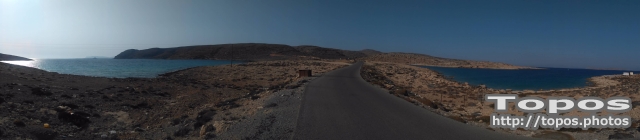
Dragonada island
Places near Dragonada island



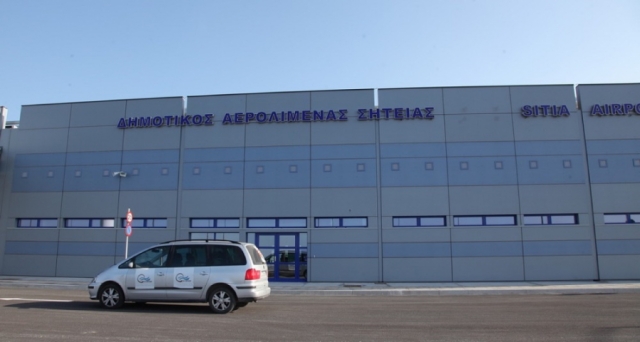

Sitia Airport (IATA: JSH, ICAO: LGST) is a small community airport in the region Mponta of Sitia Municipality, on the eastern part of Crete in Greece. The facility is serving the city of Sitia. The airport is located 1 km north/northwest of the city center.
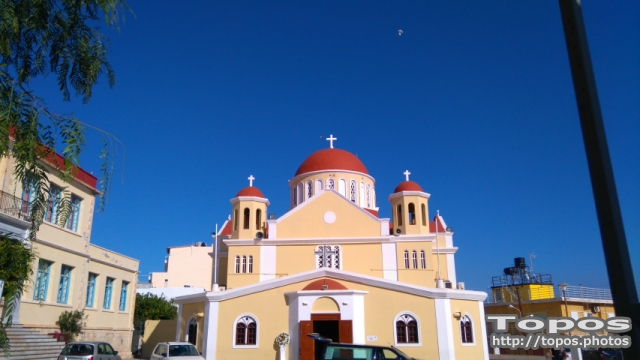

Even though the church dedicated to Saint Catherine appears to be relatively new—since it was rebuilt in the early 19th century—we can confidently identify its location as the site of the earlier Santa Caterina church of the Augustinians.
Its first belfry, on its south-western side, was constructed in 1938. The Bema was expanded with two auxiliary spaces in the early 1950s, and the dilapidated belfry was replaced in 1953-54.
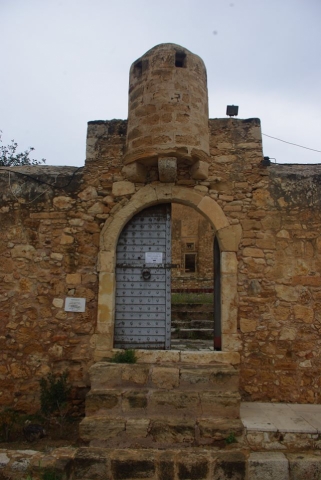

Sitia Town, East Crete. Sitia, 18 km from Palekastro and 60 from Ierapetra, with a population of 9500 people, is the easternmost city on Crete and perhaps the least developed.
Even during the busy summer peak, Sitia retains a certain charm and laid-back style.
It has been inhabited since the Minoan period. At Petra, to the east of the town, a section of ancient settlement has been excavated. There is a waterfront with restaurants and cafes, a large public beach, and an archaeological museum which holds many of the findings from Palekastro.
Sitia Town in East Crete Sitia Town in East Crete Sitia Town in East Crete
Sitia is the seat of administrative and public services for the county and has road and sea connections with various places in the island and with Pireaus and other Aegean islands. There is also a small airport with connection to Athens, Kassos, Karpathos, Rhodes. During the Venetian occupation the town of Sitia was destroyed three times.
In 1508 by a terrible earthquake, in 1538 by the pirate Barbarosa and in 1651 by the Venetians so as not to fall in the hands of the Turks. For two centuries Sitia ceased to exist as a town, until 1869. The present city was built in 1870.


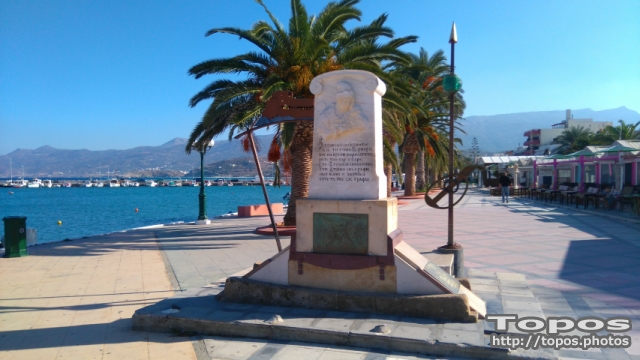


Kouremenos Beach and windsurfing in East Crete.
The longest beach of Palekastro area (1.5 km length) is only 2 km far from Palekastro village and 20 from Sitia. It is sandy and the bottom is ideal for divers. Very close to the beach you can find some taverns that serve fresh fish any time.
The beach here is mostly sandy with a few small pebbles dotted around, there is no need for booties here. The water is super flat but a small wind shadow directly off the beach is good for non-windsurfing spectators! The secluded bay offers a huge space which some times in July and August is frequented exclusively by windsufers.
The Area of Palekastro lies approximately 2,5 hours by car from the Heraklion airport on the far North Easterly point of Crete. The drive takes you through some stunning scenery along the Northern coast line with the most dramatic views through the winding roads of Eastern Crete. The drive is rewarded by a part of Greece that is devoid of mass tourism, some would say this is the Greece of 20 year ago.The lovers of windsurfing are attracted by it, as it is famous all around Europe for this sport. See in ythis article some windsurf- images.
Of course, Palekastro has more to offer. If you feel likehaving a day off or there is not enough wind for windsurfing, you don’t need to be worried about being bored. Round-trips in rental cars can also be recommended.
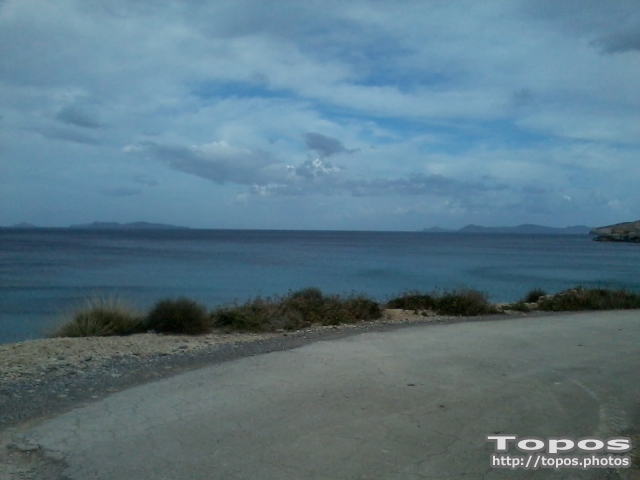

Itanos beaches are located 2 km north from Palm beach Vai, 8 from Palekastro and 26 from Sitia. The sandy beach of the ancient town of Itanos or Erimoupolis, Lassithi prefecture.
If you’re looking to kick back and relax and do nothing more serious than soak up the sun or occasionally dip your toe into crystal clear waters, then the beaches at Erimoupolis or Itanos in Lassithi Prefecture could be the place for you. Reached by walking a short distance from the small car park at the ancient site of Itanos it’s some distance to any facilities so it is essential to bring plentiful supplies of water. The beaches are quiet on weekdays but are popular at weekends so can become busy. The clear water and sandy beach are perfect for a lazy day with some palm trees offering much needed shade in the heat of the day.
Area description:
There is another longer sandy beach that you can get to - on foot - over the low hill to your left, where the main road stops.
In fact, there are 3 beaches here: the first is the one at the end of the road, the second is reached walking to the north (the beach on the 1st photo) and the third is also reached walking south behind the small fortress. The third one is also suitable to spend time under the shade of the palm-trees.
However the best selection for swimming is the northern, sandy beach. The bottom of the sea is rich. There is a whole ancient city down there giving home to a variety of fish. It is a paradise for the lovers of diving.
These are amazing beaches in Crete, secluded with perfect water. During the week it is sparsely populated but come the weekends it becomes crowded especially during July and August.There are no amenities at the beach and the closest restaurant is a 10minute drive (Palm Beach Vai), so take your own water etc. Parking can be found near the ancient site of Itanos.
What to do..
The site of Ancient Itanos is well worth a visit, particularly as it was once the most important settlement on Crete. Visitors to the site today can see ruins including a black stone tower, and Early Christian churches. Keen snorkelers will be pleased to hear that some of the site is under water, making the views through the crystal clear water even more rewarding. The town of Sitia nearby is off the well-worn tourist track in Crete so has retained much of its charm and relaxed atmosphere. With a busy harbour, a good variety of shops, a pretty seafront and a large sandy beach of its own, it’s a good base for exploring unspoilt Crete at its best.
Above the beach of Erimoupolis one can observe the red marbles that are unique to the area and which belong to the Phyllite-Quartzite unit. The rock formations can be seen from the road leading to Kyriamidis Bay.
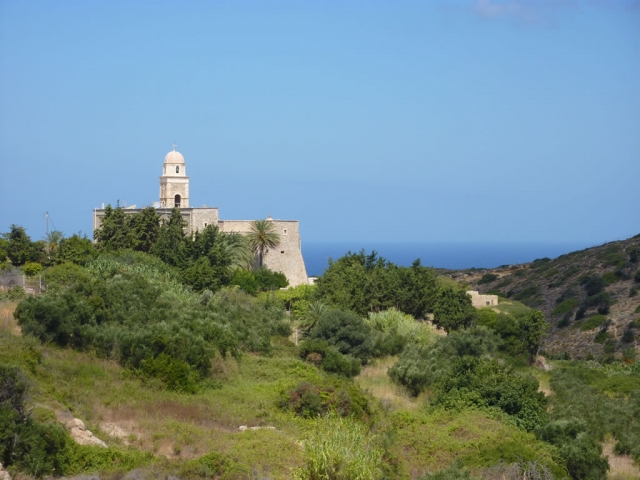


Α group of four (4) small islands at the north of the Sitia Bay, at a distance of 9 miles from Sitia. Two of them, Giannisada and Dragonara, are the biggest ones with mostly cedar-trees from Lebanon and the other two, Paximada and Paximadaki, are just small rocky islands. According to Mythology, the island was created by god Dionysus who was worshipped there and the islands were named after him. In antiquity, the islands belonged to the people of Itanos. On Dragonara, the island with the most vegetation, there are obvious traces of habitation and tombstones of the first Christian time have been found. On the eastern part of the same island, there is a cave and on the western part there are natural rocky "pillars" rising out of the sea water.There is also the small church of Agios Antonios, a small house and a small port. These islands belong to the Municipality of Sitia and according to recent research the construction of infrastructure work for the protection and the balanced tourist development of the islands is being planned. 25 years ago pasturing was forbidden; therefore the vegetation grew and the rabbits that always lived there multiplied. Dionisades Islands in Sitia, East Crete Dionisades Islands in Sitia, East Crete

The main feature of the region is the rocks and cliff. The wild raw is perfectly combined with deep blue of the sea and sky.
The rocks expanded in the sea create refuge for a lot of fish. The sea at Tenta is ideal for the lovers of fishing and scuba diving. It is popular on the whole Crete and a lot of visitors come here to enjoy the magic of fishing. There is also pisciculture here.
Though the rocks rule over the whole area, there are some small, private voes with sandy beaches ideal for swimming hidden far from nosey eyes.
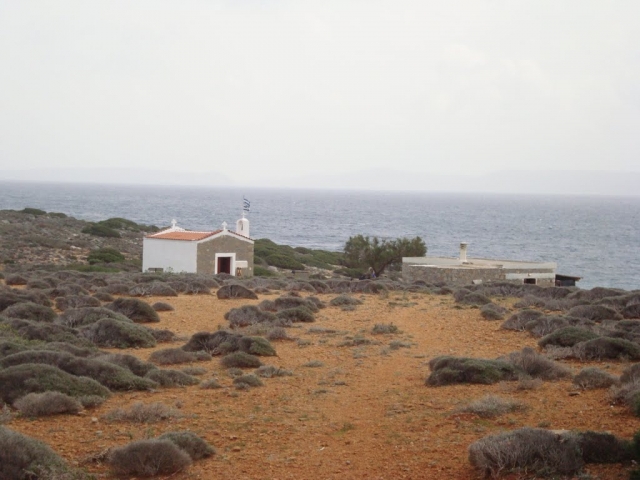


In Papadiokambos you’ll meet a long beach with large stones and rocks and an archaeological site. In some places a few bays with pebbles are formed, where you can swim. The only sure thing is that you’ll be alone, since the place is completely secluded. There is almost no infrastructure around, so be sure you have supplies with you.
Papadiokambos’ strong winds and big waves keep most visitors away. This, however, even in winter attracts the lovers of windsurfing. Papadiokambos (known by windsurfers as Faneromeni) is one of the best spots for wave sailing in Greece. Wave sailing is one of the most striking aspects of the sport. The area has strong currents, large waves 3-4m high and has actually no beach. Some places are very dangerous and you should be very careful and in advanced level, so as not to break your equipment on the rocks.

If you’re looking to kick back and relax and do nothing more serious than soak up the sun or occasionally dip your toe into crystal clear waters, then the beaches at Erimoupolis or Itanos in Lassithi Prefecture could be the place for you. Reached by walking a short distance from the small car park at the ancient site of Itanos it’s some distance to any facilities so it is essential to bring plentiful supplies of water. The beaches are quiet on weekdays but are popular at weekends so can become busy. The clear water and sandy beach are perfect for a lazy day with some palm trees offering much needed shade in the heat of the day.
Area description:
There is another longer sandy beach that you can get to - on foot - over the low hill to your left, where the main road stops.
In fact, there are 3 beaches here: the first is the one at the end of the road, the second is reached walking to the north (the beach on the 1st photo) and the third is also reached walking south behind the small fortress. The third one is also suitable to spend time under the shade of the palm-trees.
However the best selection for swimming is the northern, sandy beach. The bottom of the sea is rich. There is a whole ancient city down there giving home to a variety of fish. It is a paradise for the lovers of diving.
These are amazing beaches in Crete, secluded with perfect water. During the week it is sparsely populated but come the weekends it becomes crowded especially during July and August.There are no amenities at the beach and the closest restaurant is a 10minute drive (Palm Beach Vai), so take your own water etc. Parking can be found near the ancient site of Itanos.
What to do..
The site of Ancient Itanos is well worth a visit, particularly as it was once the most important settlement on Crete. Visitors to the site today can see ruins including a black stone tower, and Early Christian churches. Keen snorkelers will be pleased to hear that some of the site is under water, making the views through the crystal clear water even more rewarding. The town of Sitia nearby is off the well-worn tourist track in Crete so has retained much of its charm and relaxed atmosphere. With a busy harbour, a good variety of shops, a pretty seafront and a large sandy beach of its own, it’s a good base for exploring unspoilt Crete at its best.


The hotel Porto Heli is a traditional complex of apartments only 1km from the village of Palekastro, nearby the beautiful beach of Kouremenos, famous for its windsurf Club, and only 8km from the unique palm beach of Vai.
The distance from Sitia Port-Airport is 20km and from Heraklion Airport 148km.




Saint Isidore or Cavo Sidero (see also Cavo Sidero Beach) is located at the northeasternmost tip of Crete, 34km east of Sitia, 16 km from Palekastro, and 99km east of Agios Nikolaos.
The lighthouse was constructed by the French in 1880. The northeastern extremity of Crete is defined by a thin peninsula tipped by Cape Sideros and enclosing the Gulf of Kissamos. The area is also known as Agios Isidoros, "the gift", for a church established there many years ago after a castaway monk came ashore. He built the little church to give thanks to God , since he had been adrift at sea for many days. To have survived the ordeal was, indeed, a gift.
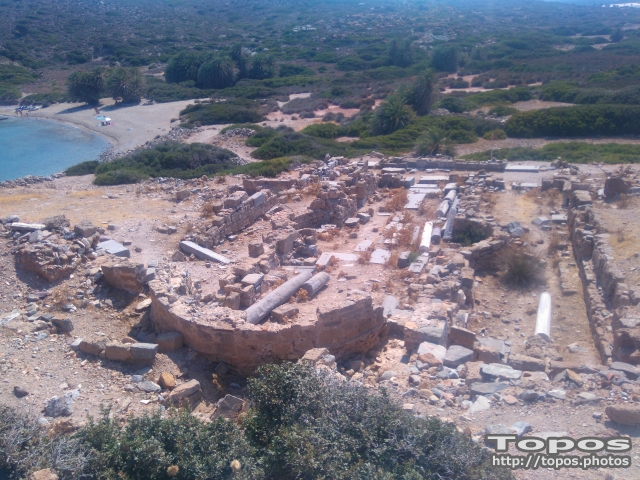
Below the cape is a foundation and parts of columns from a ruined temple to Athena. It was destroyed by an ancient tsumami that swept the coast of Crete after an eruption on Santorini. There is a spring nearby where lightkeepers washed their clothes, and offshore are the sunken remains of several shipwrecks that look like whales swimming on the surface of the sea.
Small islands and large rocks are scattered off Cape Sideros as well as the dangerous Sideros Reef about 600 yards (548 meters) east of the cape. Ships make landfall here and round the cape as they steer in and out of the Libyan Sea. It is a barren area with few inhabitans an ideal place for a monastic existence. However , land developers have taken an interest in the area, and its tranquility is under threat.


The castle fortress known today as "Kazarma" (Casa di arma), is the most imposing historical monument in Sitia town, East Crete. The Kazarma used to be a military and administrative centre which consisted of a Medieval dwelling surrounded by walls. The fortification of the town and of the Kazarma can be dated to the late Byzantine period. However, pirate raids, the continual uprisings against the Venetian occupation by the local people and the great earthquake all led to the partial destruction of the fortifications until the Venetians themselves were forced to completely destroy them with the intention of rebuilding them. This never happened and in 1651 the town was razed and then occupied by the Turks.
During the Turkish occupation it would appear that the walls were never rebuilt but the Kazarma was restored and evidence of the Turkish extensions can be seen today, for example in the cupolas ("koubedes") on the battlements that form the watch towers. The Kazarma has since been carefully restored and is open to the public offering a panoramic view across the bay of Sitia.
Concerts, plays, lectures and art exhibitions all take place in the Kazarma during the summer months as part of the festival known as "Kornaria".

Itanos beaches are located 2 km north from Palm beach Vai, 8 from Palekastro and 26 from Sitia. The sandy beach of the ancient town of Itanos or Erimoupolis, Lassithi prefecture.
If you’re looking to kick back and relax and do nothing more serious than soak up the sun or occasionally dip your toe into crystal clear waters, then the beaches at Erimoupolis or Itanos in Lassithi Prefecture could be the place for you. Reached by walking a short distance from the small car park at the ancient site of Itanos it’s some distance to any facilities so it is essential to bring plentiful supplies of water. The beaches are quiet on weekdays but are popular at weekends so can become busy. The clear water and sandy beach are perfect for a lazy day with some palm trees offering much needed shade in the heat of the day.
Area description:
There is another longer sandy beach that you can get to - on foot - over the low hill to your left, where the main road stops.
In fact, there are 3 beaches here: the first is the one at the end of the road, the second is reached walking to the north (the beach on the 1st photo) and the third is also reached walking south behind the small fortress. The third one is also suitable to spend time under the shade of the palm-trees.
However the best selection for swimming is the northern, sandy beach. The bottom of the sea is rich. There is a whole ancient city down there giving home to a variety of fish. It is a paradise for the lovers of diving.
These are amazing beaches in Crete, secluded with perfect water. During the week it is sparsely populated but come the weekends it becomes crowded especially during July and August.There are no amenities at the beach and the closest restaurant is a 10minute drive (Palm Beach Vai), so take your own water etc. Parking can be found near the ancient site of Itanos.
What to do..
The site of Ancient Itanos is well worth a visit, particularly as it was once the most important settlement on Crete. Visitors to the site today can see ruins including a black stone tower, and Early Christian churches. Keen snorkelers will be pleased to hear that some of the site is under water, making the views through the crystal clear water even more rewarding. The town of Sitia nearby is off the well-worn tourist track in Crete so has retained much of its charm and relaxed atmosphere. With a busy harbour, a good variety of shops, a pretty seafront and a large sandy beach of its own, it’s a good base for exploring unspoilt Crete at its best.


 Login with
Facebook
Login with
Facebook