




 Upload your photos for Prasonisi Island and share them with us!
 Press here.


 Address:
 Telephone:




Places near Prasonisi Island
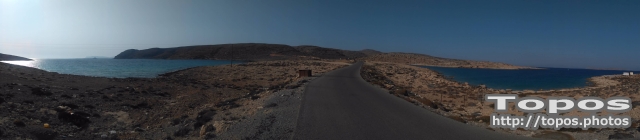

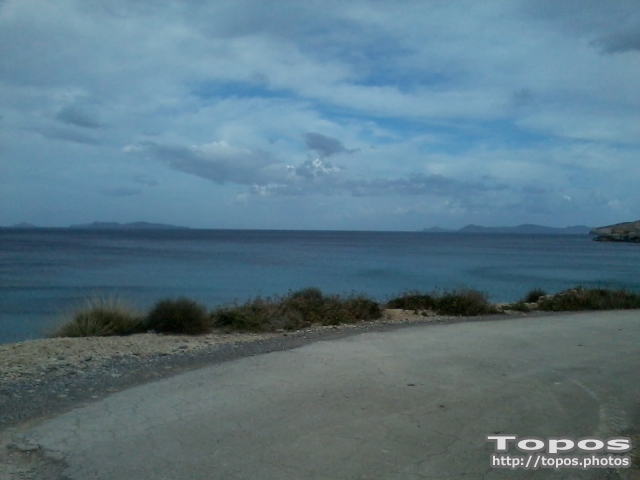


Itanos beaches are located 2 km north from Palm beach Vai, 8 from Palekastro and 26 from Sitia. The sandy beach of the ancient town of Itanos or Erimoupolis, Lassithi prefecture.
If you’re looking to kick back and relax and do nothing more serious than soak up the sun or occasionally dip your toe into crystal clear waters, then the beaches at Erimoupolis or Itanos in Lassithi Prefecture could be the place for you. Reached by walking a short distance from the small car park at the ancient site of Itanos it’s some distance to any facilities so it is essential to bring plentiful supplies of water. The beaches are quiet on weekdays but are popular at weekends so can become busy. The clear water and sandy beach are perfect for a lazy day with some palm trees offering much needed shade in the heat of the day.
Area description:
There is another longer sandy beach that you can get to - on foot - over the low hill to your left, where the main road stops.
In fact, there are 3 beaches here: the first is the one at the end of the road, the second is reached walking to the north (the beach on the 1st photo) and the third is also reached walking south behind the small fortress. The third one is also suitable to spend time under the shade of the palm-trees.
However the best selection for swimming is the northern, sandy beach. The bottom of the sea is rich. There is a whole ancient city down there giving home to a variety of fish. It is a paradise for the lovers of diving.
These are amazing beaches in Crete, secluded with perfect water. During the week it is sparsely populated but come the weekends it becomes crowded especially during July and August.There are no amenities at the beach and the closest restaurant is a 10minute drive (Palm Beach Vai), so take your own water etc. Parking can be found near the ancient site of Itanos.
What to do..
The site of Ancient Itanos is well worth a visit, particularly as it was once the most important settlement on Crete. Visitors to the site today can see ruins including a black stone tower, and Early Christian churches. Keen snorkelers will be pleased to hear that some of the site is under water, making the views through the crystal clear water even more rewarding. The town of Sitia nearby is off the well-worn tourist track in Crete so has retained much of its charm and relaxed atmosphere. With a busy harbour, a good variety of shops, a pretty seafront and a large sandy beach of its own, it’s a good base for exploring unspoilt Crete at its best.
Above the beach of Erimoupolis one can observe the red marbles that are unique to the area and which belong to the Phyllite-Quartzite unit. The rock formations can be seen from the road leading to Kyriamidis Bay.
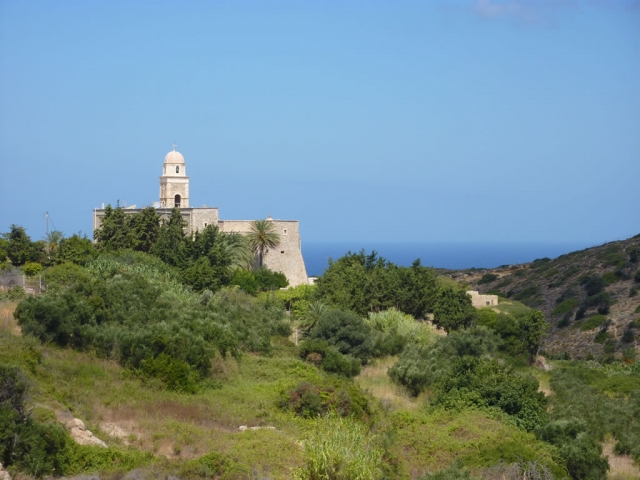


The main feature of the region is the rocks and cliff. The wild raw is perfectly combined with deep blue of the sea and sky.
The rocks expanded in the sea create refuge for a lot of fish. The sea at Tenta is ideal for the lovers of fishing and scuba diving. It is popular on the whole Crete and a lot of visitors come here to enjoy the magic of fishing. There is also pisciculture here.
Though the rocks rule over the whole area, there are some small, private voes with sandy beaches ideal for swimming hidden far from nosey eyes.
Α group of four (4) small islands at the north of the Sitia Bay, at a distance of 9 miles from Sitia. Two of them, Giannisada and Dragonara, are the biggest ones with mostly cedar-trees from Lebanon and the other two, Paximada and Paximadaki, are just small rocky islands. According to Mythology, the island was created by god Dionysus who was worshipped there and the islands were named after him. In antiquity, the islands belonged to the people of Itanos. On Dragonara, the island with the most vegetation, there are obvious traces of habitation and tombstones of the first Christian time have been found. On the eastern part of the same island, there is a cave and on the western part there are natural rocky "pillars" rising out of the sea water.There is also the small church of Agios Antonios, a small house and a small port. These islands belong to the Municipality of Sitia and according to recent research the construction of infrastructure work for the protection and the balanced tourist development of the islands is being planned. 25 years ago pasturing was forbidden; therefore the vegetation grew and the rabbits that always lived there multiplied. Dionisades Islands in Sitia, East Crete Dionisades Islands in Sitia, East Crete
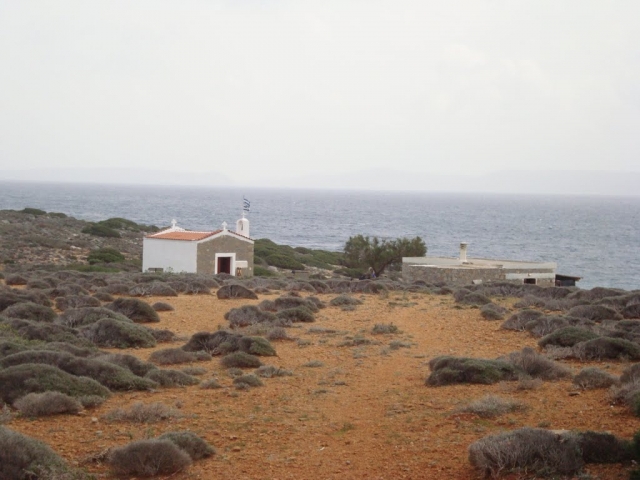

If you’re looking to kick back and relax and do nothing more serious than soak up the sun or occasionally dip your toe into crystal clear waters, then the beaches at Erimoupolis or Itanos in Lassithi Prefecture could be the place for you. Reached by walking a short distance from the small car park at the ancient site of Itanos it’s some distance to any facilities so it is essential to bring plentiful supplies of water. The beaches are quiet on weekdays but are popular at weekends so can become busy. The clear water and sandy beach are perfect for a lazy day with some palm trees offering much needed shade in the heat of the day.
Area description:
There is another longer sandy beach that you can get to - on foot - over the low hill to your left, where the main road stops.
In fact, there are 3 beaches here: the first is the one at the end of the road, the second is reached walking to the north (the beach on the 1st photo) and the third is also reached walking south behind the small fortress. The third one is also suitable to spend time under the shade of the palm-trees.
However the best selection for swimming is the northern, sandy beach. The bottom of the sea is rich. There is a whole ancient city down there giving home to a variety of fish. It is a paradise for the lovers of diving.
These are amazing beaches in Crete, secluded with perfect water. During the week it is sparsely populated but come the weekends it becomes crowded especially during July and August.There are no amenities at the beach and the closest restaurant is a 10minute drive (Palm Beach Vai), so take your own water etc. Parking can be found near the ancient site of Itanos.
What to do..
The site of Ancient Itanos is well worth a visit, particularly as it was once the most important settlement on Crete. Visitors to the site today can see ruins including a black stone tower, and Early Christian churches. Keen snorkelers will be pleased to hear that some of the site is under water, making the views through the crystal clear water even more rewarding. The town of Sitia nearby is off the well-worn tourist track in Crete so has retained much of its charm and relaxed atmosphere. With a busy harbour, a good variety of shops, a pretty seafront and a large sandy beach of its own, it’s a good base for exploring unspoilt Crete at its best.
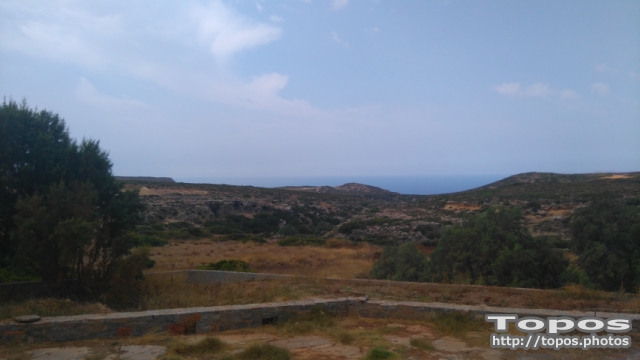


Saint Isidore or Cavo Sidero (see also Cavo Sidero Beach) is located at the northeasternmost tip of Crete, 34km east of Sitia, 16 km from Palekastro, and 99km east of Agios Nikolaos.
The lighthouse was constructed by the French in 1880. The northeastern extremity of Crete is defined by a thin peninsula tipped by Cape Sideros and enclosing the Gulf of Kissamos. The area is also known as Agios Isidoros, "the gift", for a church established there many years ago after a castaway monk came ashore. He built the little church to give thanks to God , since he had been adrift at sea for many days. To have survived the ordeal was, indeed, a gift.
Below the cape is a foundation and parts of columns from a ruined temple to Athena. It was destroyed by an ancient tsumami that swept the coast of Crete after an eruption on Santorini. There is a spring nearby where lightkeepers washed their clothes, and offshore are the sunken remains of several shipwrecks that look like whales swimming on the surface of the sea.
Small islands and large rocks are scattered off Cape Sideros as well as the dangerous Sideros Reef about 600 yards (548 meters) east of the cape. Ships make landfall here and round the cape as they steer in and out of the Libyan Sea. It is a barren area with few inhabitans an ideal place for a monastic existence. However , land developers have taken an interest in the area, and its tranquility is under threat.
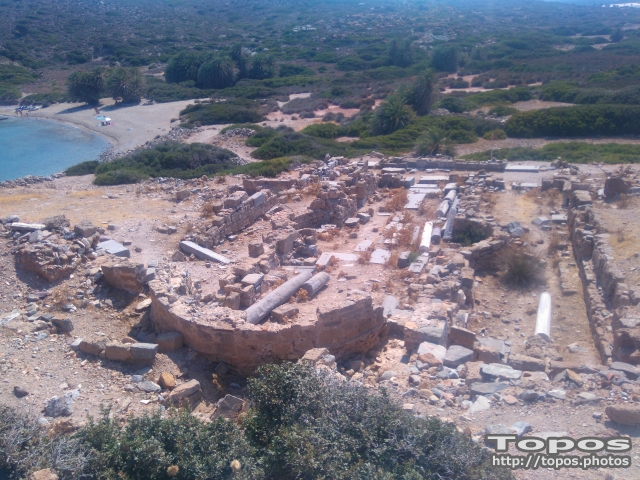

Maridati beach is to the north of Kouremenos gulf and has been known for years for its unique multicolored rock formations. They are multicolored shale and other metamorphosed rocks of the Phyllite-Quartzite unit.

Itanos beaches are located 2 km north from Palm beach Vai, 8 from Palekastro and 26 from Sitia. The sandy beach of the ancient town of Itanos or Erimoupolis, Lassithi prefecture.
If you’re looking to kick back and relax and do nothing more serious than soak up the sun or occasionally dip your toe into crystal clear waters, then the beaches at Erimoupolis or Itanos in Lassithi Prefecture could be the place for you. Reached by walking a short distance from the small car park at the ancient site of Itanos it’s some distance to any facilities so it is essential to bring plentiful supplies of water. The beaches are quiet on weekdays but are popular at weekends so can become busy. The clear water and sandy beach are perfect for a lazy day with some palm trees offering much needed shade in the heat of the day.
Area description:
There is another longer sandy beach that you can get to - on foot - over the low hill to your left, where the main road stops.
In fact, there are 3 beaches here: the first is the one at the end of the road, the second is reached walking to the north (the beach on the 1st photo) and the third is also reached walking south behind the small fortress. The third one is also suitable to spend time under the shade of the palm-trees.
However the best selection for swimming is the northern, sandy beach. The bottom of the sea is rich. There is a whole ancient city down there giving home to a variety of fish. It is a paradise for the lovers of diving.
These are amazing beaches in Crete, secluded with perfect water. During the week it is sparsely populated but come the weekends it becomes crowded especially during July and August.There are no amenities at the beach and the closest restaurant is a 10minute drive (Palm Beach Vai), so take your own water etc. Parking can be found near the ancient site of Itanos.
What to do..
The site of Ancient Itanos is well worth a visit, particularly as it was once the most important settlement on Crete. Visitors to the site today can see ruins including a black stone tower, and Early Christian churches. Keen snorkelers will be pleased to hear that some of the site is under water, making the views through the crystal clear water even more rewarding. The town of Sitia nearby is off the well-worn tourist track in Crete so has retained much of its charm and relaxed atmosphere. With a busy harbour, a good variety of shops, a pretty seafront and a large sandy beach of its own, it’s a good base for exploring unspoilt Crete at its best.


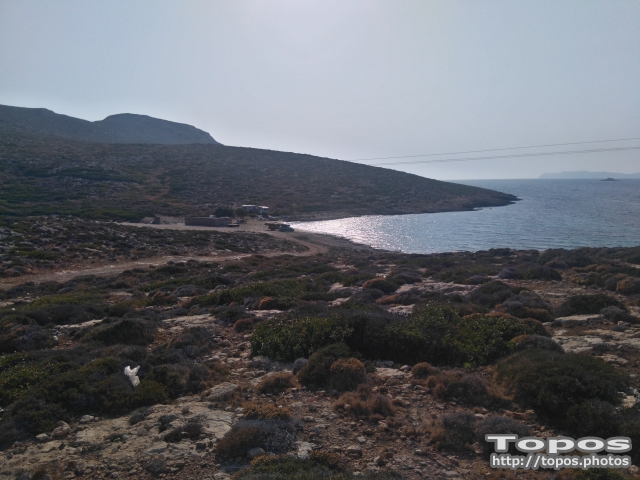

The amazing beach of Megali Kefala is quite a distance to the south of Vai and the only way to access it is through the hiking trail. The beach’s cliffs contain multicolored metamorphosed Phyllite-Quartzite unit rocks, which create a unique seaside scenery.
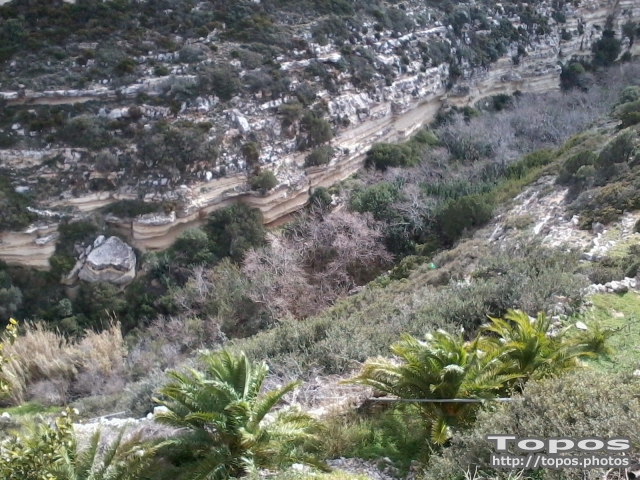


Drive west out of Sitia on the main road to Agios Nikolaos. The marked exit to the Faneromeni Monastery is on the right. There are two exits a few kilometers apart that meet in the middle. The monastery is reached after a signposted, 30-minute drive on a good dirt track. When you reach the sea, continue along the road as it climbs uphill for about 2km from the sea. The monastery is perched dramatically on the edge of a canyon. The monastery is perched dramatically on the edge of a canyon. Faneromenis Sitia Monastery Faneromenis Sitia Monastery and the area Faneromenis Sitia Monastery and the Agii Pandes Gorge The name of the monastery (Faneromeni, "revealed") was taken from an icon of the Virgin which was found in a small cave beside the church. The frescoes in this small fourteenth century monastery church are dated 1455 and were blackened by smoke when the church was set on fire to by the Turks.There is an inscription commemorating renovations on the monks cells in 1624. Faneromenis Sitia Monastery

Psili ammos Beach: An exceptional beach with fine, golden sand and turquoise waters. Is is located very close to the south of famous Palm Beach Vai, east Crete, 7km north from Palekastro village and 90km far from Heraklion city.
The hills create a natural division for privacy.Its name means Fine Sand and the sand extends up to the hill.
On Psili Ammos beach, once can see the characteristic dunes, which are, Aeolian coastal sand deposits, which create low sand dunes extending over the entirety of the beach’s coastal zone.
In order to reach this remote beach, you have to walk 10 min. starting from Vai palm beach to southeast.



Palm beach Vai
Vai beaches are located 25 km from Sitia and 6 km far from Palekastro Village. The combination of a magnificent beach with a rare grove of palm trees makes Palm Beach Vai one of the absolute musts of Crete.
According to a legend, Arab pirates who came to Crete threw out the pips of the dates they were eating while they were here and that from these came this grove of 5000 palms. It is prohibited to camp overnight within the grove, which covers an area of 60 acres and is protected by fencing under the care of the Forestry Service. It is organised and has been awarded with the EU Blue Flag.
It is an exotic, tropical beach with fine sand and pebbles and crystal-clear blue sea. 155 km far from Heraklion Airport.


 Login with
Facebook
Login with
Facebook