



 Ανεβάστε φωτογραφίες από
Gourgouthakas και μοιραστείτε τις μαζί μας!
Ανεβάστε φωτογραφίες από
Gourgouthakas και μοιραστείτε τις μαζί μας!


 Διεύθυνση:
 Τηλέφωνο:




Gourgouthakas
At the location of "Atzines" at an altitude of 1500 m, in the foothills of the Lefka Ori Mountains, Chania Prefecture, close to the village of Melidoni in the district of Apokoronas, was discovered in 1990 - and fully explored by 1998 - the deepest cavern in Greece, the famous Gourgouthakas, 1208 meters (3965 feet) deep and 900 meters in length!
Initially discovered in the early nineties, Greek speleologists were the first to investigate the cave; a couple short years later a team of climbers triumphantly conquered it. The area around Gourgouthakas Cave is extremely beautiful and worth exploring on its own. Only those who are the most qualified and experienced climbers should consider this expedition.
Many experts often refer to West Crete as a "region of caverns". By the latest official account (1999), cavers recorded 1503 caves, only in the general region of Hania! Most of them, apart from their natural beauty, have a touch of historical flavor: In different times -some as early as the first inhabits of the island-they used to be religious and ceremony grounds. In more recent years, they were used as hideouts and partisan bases.
Μέρη κοντινά με Gourgouthakas

No many dirt roads have been left in Sfakia so this is your chance if you have a 4x4 to get to two beautiful plateaus, the Tavri and Niatos.The road starts from Ammoudari village (there is a label) in Askifou Plateau, but be careful not to get confused because in the village the road forks. You have to turn left immediately after passing the building of OTE. For the next 2.8 km you drive on asphalt and then you get on a dirt road with a planted stone.
As you go up, you have a panoramic view of the Askifou plateau. In front of you, among the mountains, the sea pops up. You will reach Tavri after 7 kms and after 600 more meters you will see the path that goes left to the mountain retreat.
Do not stop here but continue for about 1 km further until you reach the beautiful Niatos plateau from whence many paths lead you to Kaloi Lakkoi, to Katsiveli and to Omalos in a demanding hike of 16 hours! In Niatos the dirt road makes a circle and you can move around to admire it from any aspect
Dozens of sheep usually graze here. In spring you will see flowers in all shades and colours appearing even among the stones. Above the plateau, the snowy peaks of the Lefka Ori mountains rise and there is an almost eerie silence across the region .
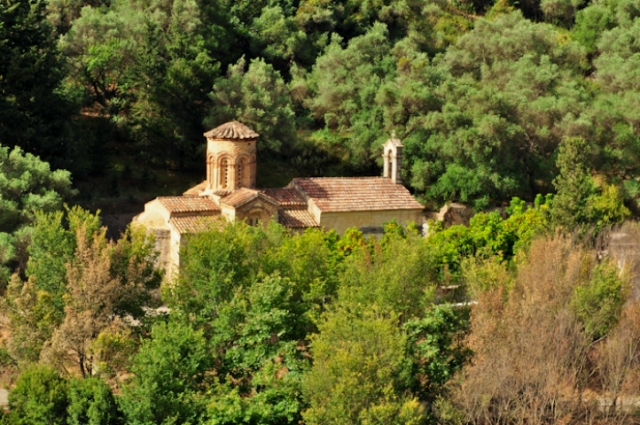

Ο ναός του Αγίου Νικολάου βρίσκεται κοντά στο μικρό οικισμό Κυριακοσέλια, στους πρόποδες ενός λόφου, πάνω στον οποίο είναι κτισμένο το ομώνυμο πρωτοβυζαντινό φρούριο, που ελέγχει τον κύριο οδικό άξονα προς τα δυτικά και την είσοδο στον κόλπο της Σούδας. Κατά το διάστημα 1230-36 οι ντόπιοι επαναστάτες υπό την ηγεσία ντόπιων "αρχοντορωμαίων"με τη συνεπικουρία των στρατευμάτων της αυτοκρατορίας της Νίκαιας Ιωάννη Βατάτζη, εγκαταστάθηκαν στο φρούριο. Αναχώρησαν μετά από συνθήκη από το λιμάνι της Σούδας. Την εποχή εκείνη έγιναν εκτεταμένες επεμβάσεις στο ναό και η τοιχογράφησή του, σύμφωνα με το μελετητή του Μ. Μπορμπουδάκη.
Ο ναός χτίστηκε περί τον 11ο αιώνα ως μονόχωρος, καμαροσκέπαστος, πιθανώς με τρουλοκαμάρα, όπως προκύπτει από τα αρχικά παράθυρα στα πλευρικά τυφλά αψιδώματα. Αρχαϊκά στοιχεία όπως η μεγάλη ημικυλινδρική αψία με το ισοϋψές τρίλοβο παράθυρο, η χρήση ζωνών από πλίνθο, σε συνδυασμό με κοινή τοιχοποιία, συνυπάρχουν με σύγχρονα, όπως η πλαστική διαμόρφωση των όψεων με τυφλά αψιδώματα, που φτάνουν από την πρωτεύουσα μετά την απελευθέρωση της Κρήτης από τους άραβες. Κατά τον 13ο αιώνα ο ναός υπέστη εκτεταμένες μετατροπές, όπως η υπερύψωση των πλαγίων κεραιών, η απόδοση στη στέγαση σταυροειδούς μορφής και η προσθήκη ενός εξαιρετικά ραδινού τρούλου. Στις αρχές του 20ού αιώνα κατεδαφίστηκε ο δυτικός τοίχος και προστέθηκε μονόχωρη επέκταση.
Την ίδια εποχή ο ναός διακοσμήθηκε με λαμπρό διάκοσμο, που σώζεται σε μεγάλη έκταση. Στο τεταρτοσφαίριο της κόγχης του ιερού εικονίζεται η Παναγία ένθρονη ανάμεσα σε δυο σεβίζοντες αγγέλους, η κοινωνία των Αποστόλων σε δυο σκηνές και χαμηλά συλλειτουργούντες ιεράρχες και ο Μελισμός. Τον τρούλο καταλαμβάνει ο Χριστός Αντιφωνητής με τους τέσσερις σεβίζοντες αρχαγγέλους, προφήτες στο τύμπανο και ευαγγελιστές στα σφαιρικά τρίγωνα. Το ανατολικό τμήμα της ημικυλινδρικής καμάρας καταλαμβάνει μνημειακή παραάσταση της Ανάληψης και το δυτικό η Πεντηκοστή. Στους ανατολικούς πεσούς, που φαίνεται ότι έπαιζαν το ρόλο τέμπλου εικονίζονται ο Χριστός Αντιφωνητής, η Παναγία Βλαχερνίτισσα, ο Άγιος Νικόλαος επίσκοπος Μύρων ο Άγιος Νικόλαος ο Ομολογητής από την Κυδωνία, στον οποίο φαίνεται ότι ήταν αφιερωμένος ο ναός. Χαμηλά εικονίζονται ολόσωμοι άγιοι με έμφαση στους ιεράρχες ανατολικά και οσίους και ομολογητές δυτικά. Τις υπόλοιπες επιφάνειες καταλαμβάνουν παραστάσεις από τρεις εικονογραφικούς κύκλους, το θεομητορικό με έμφαση στη νεότητα της Θεοτόκου, τον εξαιρετικά αναπτυγμένο ευαγγελικό και το βίο του Αγίου Νικολάου Μύρων, δεδομένου ότι δε φαίνεται να υπήρχε εικονογραφικός κύκλος του Νικολάου του Ομολογητή.
Στις τοιχογραφίες του ναού των Κυριακοσελίων έχει χρησιμοποιηθεί η τεχνική της νωπογραφίας και πολυτελή χρώματα, όπως το "μπλε της Αιγύπτου". Σε πολλά σημεία, ιδίως σε πρόσωπα, όπου έχει χρησιμοποιηθεί και η ξηρο-γραφία, διακρίνονται οι γρήγορες γραμμές του προσχεδίου. Εικονογραφικά ακολουθείται η παράδοση του 12ου αιώνα και διακρίνονται σχέσεις με άλλα κρητικά μνημεία, όπως ο κοντινός ναός του Αγίου Γεωργίου στον Κουρνά. Τεχνοτρο-πικά αναγνωρίζονται περισσότεροι από ένας ζωγράφοι. Σε γενικές γραμμές στο πλάσιμο των όγκων ακολουθούνται διαδικασίες της κομνήνειας παράδοσης με υποχώρηση της γραμμικότητας και της τυποποίησης σε μια πρώιμη εμφάνιση των τάσεων, που θα επικρατήσουν στην περίοδο των Παλαιολόγων.
Εξαιρετική ποιότητα διακρίνεται και στην απόδοση των μορφών, έργων ενός εξαιρετικής ικανότητας ζωγράφου.
Έχουν χρονολογηθεί στην τέταρτη δεκαετία του 13ου αιώνα.
Πηγή: Ανδριανάκης Μιχάλης, Επίτιμος έφορος αρχαιοτήτων

It was built in 1994. Christos Houliopoulos, the then president of the mountaineering club, led the building works and the shelter is named after him. It is worth mentioning that the greater part of the building materials had to be brought by helicopter to this location. It is about 6-7 hours hiking away from the Kallergi shelter, and from Rousies where the dirt road from Anopoli village ends, it is about 3 hours away. The shelter can accommodate 20 climbers.

Thimia is a traditional village close to Melidoni village, situated at the northern range from the White Mountains, by Chania Prefecture, West Crete at an altitude of 460m above sea level. It belongs to Keramies municipality and has 58 residents (2001).
The people in these villages continue to live with the traditions and customs of their forefathers, and technology, though beneficial, has not brought significant changes to their characteristic way of life. You will discover a whole new world, one that has nothing to do with the tourist world of the northern Cretan coast that’s just a few kilometres away...
Pemonia is a village in the broader area of Apokoronas in Chania, a well-known and famous area for its natural beauty and the diversity of the genuine Cretan countryside, offering its visitor ample possibilities for any form of ecotourism or alternative tourism in the rugged, unspoiled Cretan countryside, in the mountains or on the beaches.
This small but picturesque mountainous village remains unspoiled through the ages, far away from any form of tourist exploitation.
The village is 26 km away from the city of Chania, in the middle of the road between Chania and Rethymnon, and a mere 1,5 km from the basic road axis of Crete of Hania-Heraklion at the foot of White Mountains. The warmth of the mountainous scenery and the mild Cretan winters make Pemonia an ideal destination for winter getaways; at the same time, its proximity to the picturesque beaches of Kalives and Almyrida (only 9 km away) and the endless beaches of Georgioupolis (8 km away) provides an alternative solution for wonderful summer vacations.
In the nearby villages at less than 2 km away, there are many traditional taverns serving genuine traditional Cretan dishes made with excellent local products. Local people, who can appreciate what Cretan cuisine has to offer, often choose the taverns in Agioi Pantes (just 1.5 km away), Tzitzifes (1.5 km away) and Melidoni (2 km away) for their excellent food. Of course, a little farther away you will find many more seaside taverns and restaurants in Kalives, Georgioupolis, Almyrida and Armeni.

In Tzitzifies you will see a large pink church before which starts a dirtroad going right. This is a chance to enjoy this route through the northern side of the White Mountains, one that does not stop in the middle of nowhere (for a change), but makes a half circle and takes you to Vafes. If it was pretty late when you left Hania, or if you took your time along the way and find that it will soon be dark, you can camp in the beautiful Vothonas plateau, at an excellent spot at the middle of the route. The Vothonas plateau is found at a height of six hundred metres and having everything you need: thick grass, shade-giving trees, and a cistern with drinkable water.
To get to Vafes, simply cross the plateau, ignoring the road you will see to your right (this seems to go up the mountain, but in fact stops after five hundred metres in front of a shepherd’s hut). From Vafes you continue on an asphalt-paved road, which will take you straight to village of Vrisses.

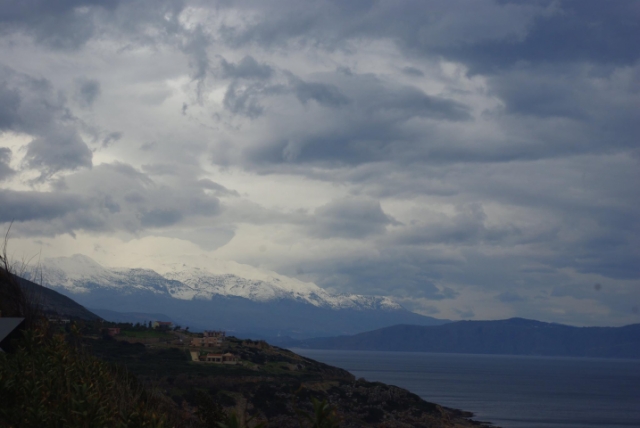

Κατασκευάστηκε ως μονάδα εστίασης και αναψυχής από τη Δημοτική επιχείρηση του Δήμου Κεραμειών όπου και ανήκει.

The village of Drakona is located 22.5 km south of Hania city and 7 km east of Therisso Village at 510m a.s.l. with 251 inhabitants.It is part of the municipality of Keramia. From here starts an amazing course of 7 km (asphalt) through the forest to the village of Therisso.
Starting from Vrisses village you drive through beautiful and completely unknown areas and villages on the Lefka Ori mountains: Vrisses - Fres - Melidoni - Ramni - Madaro - Thimia - Plativola - Drakona - Therisso. It belongs to Keramies municipality.


 Σύνδεση με
Facebook
Σύνδεση με
Facebook