



 Ανεβάστε φωτογραφίες από
Tzanis (Chonos) και μοιραστείτε τις μαζί μας!
Ανεβάστε φωτογραφίες από
Tzanis (Chonos) και μοιραστείτε τις μαζί μας!


Νομός: Χανίων
 Διεύθυνση:
 Τηλέφωνο:




Tzanis (Chonos)
On the right hand side of the road descending from the Omalos plateau to Chania, there is the large canyon-cave called Honos or the Cave of Tzanis, which served as the den of the chieftain Tzanis Markos during the first years of the Turkish invasion.
Nicknamed ‘Fovos’ (fear), he struck terror into the hearts of the invaders. The cave was explored for the first time by speleologists from Chania and France. It is 2.5 kms in length, and the height of the cavern is 241 metres; it forms a huge covered gorge.
Opposite the entrance of the cave of Tzanis, on a small knoll, there is the Tower and chapel of the famous rebel chieftain from Lakki and hero of the Lefka Ori, Hadzimihalis Yiannaris (1851-1916). One of the pioneers in the uprisings of 1855 and 1856 and a major contributor to the great uprising of 1866-1869, he was imprisoned many times by the Turks but always managed to escape. On one occasion, about to attempt the almost impossible escape from the fortress of Firkas in Chania in 1860, he vowed that if successful he would build the small chapel of Agios Panteleimon in Omalos next to the Tower. He kept the vow and, honoured as a general, was buried there according to his own wishes, in his old "lair". Great both in stature and soul, he served as a general leader of the district of Kydonia in Chania from 1866 to 1898.
Μέρη κοντινά με Tzanis (Chonos)

Φαράγγι και σπήλαιο Βρυσί
Το Βρυσι είναι ένα κακοτράχαλο φαράγγι στον τόπο των φαραγγιών και των σπηλαίων.
Η διάβαση του πραγματοποιείται είτε από την Ζούρβα, είτε μέσω του καταφυγίου Καλλέργη, από τον Ομαλό,. Μέσα σ’ αυτό το φαράγγι ευρίσκεται ένα σπήλαιο με υπόγειο ποτάμι, το Βρυσί, από το οποίο έλαβε το όνομα του και το φαράγγι.
Η πρώτη εξερεύνηση επιχειρήθηκε τα έτη 1985 και 1986 από μια αποστολή Ιταλών φοιτητών που προχώρησαν στο υπόγειο ποτάμι ερευνώντας τις δυο γαλαρίες του, μέχρι αποστάσεως 350 περίπου μέτρων από την κάθε είσοδο. Την 15η Σεπτεμβρίου 2001 μια ομάδα από την Σπηλαιολογική Ομάδα Χανίων και από τον Σπηλαιολογικό Όμιλο Κρήτης έφτασαν στα ίδια σημεία όπου και οι Ιταλοί.
Κατά την περιγραφή των μετά από διαδρομή 150 περίπου μέτρων το σπήλαιο διχάζεται και προχωρεί με δύο γαλαρίες που και οι δύο διασχίζονται από μικρό ποτάμι. Υπάρχει θαυμάσιος φυσικός διάκοσμος από σταλακτίτες, ιδίως στα πρώτα διαμερίσματα, και οι συνεχείς μικρές λίμνες- γούρνες, ορισμένες με αρκετή ποσότητα νερού, σε συνδυασμό με το διάκοσμο καθιστούν το χώρο του σπηλαίου φαντασμαγορικό.
Η επίσκεψη του συστήνεται μόνο με συνοδεία οδηγού από τον ορειβατικό όμιλο Χανίων.


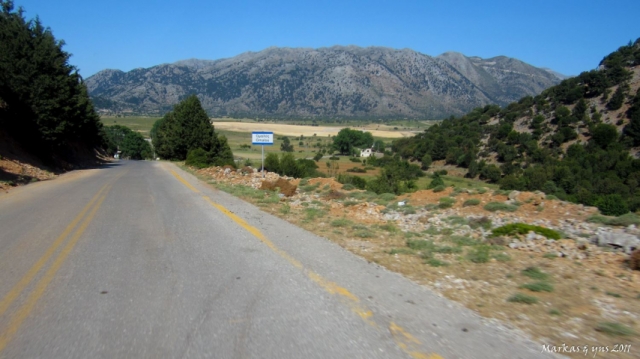


Lakkoi (Greek: Λάκκοι), commonly spelled Lakki on road signs and maps, is a village on the Greek island of Crete in the foothills of the Lefka Ori (White Mountains). The village is situated on the road between Chania and the plateau of Omalos which leads to the Samaria Gorge.
Lakkoi is 450 meters high, below the White Mountains which rise another 1,000 meters to the south. Most of the houses cling to steep slopes covered in olive and chestnut trees, reached through narrow roads or tracks that run down from the main square.The climate is cool in winter, with occasional snow, wet in spring, hot and dry in the summer. In the unusually dry summer of 2007, major brush fires broke out twice, burning about 2,000 acres and threatening the village itself.Traditionally the villagers have cultivated olives and raised goats, sheep and chickens. With limited work opportunities, the population has declined from a peak of around 2,000 to about 400 today. There are signs of growth as houses are being purchased and renovated by citizens of other European Union countries seeking low-cost retirement or vacation homes.The first historical mention of the village dates from 1263, when the Lakkoi chieftain Pentachtenis took part in a revolt against the Venetians. In a later revolt in 1570 the chieftain George Mousouris became Secretary General of the rebel forces, based in the nearby village of Meskla.After the Ottoman conquest of the island, the people of Lakkoi were involved in periodic revolts, notably the revolt of 1821-1828 during the Greek War of Independence, where an Ottoman army of 5,000 men led by Latif Pasha of Chania was routed in a pitched battle at Lakki. In the great rebellion of 1866-1869 Katerina Stamataki of Lakkoi was a distinguished woman revolutionary.During the Battle of Crete in May 1941 and the days that followed, four hundred and eighty five men and women resisted the German occupiers, and sixty eight Lakkoiotes lost their lives in the fight for the freedom of Greece.


 Σύνδεση με
Facebook
Σύνδεση με
Facebook