



 Ανεβάστε φωτογραφίες από
Άγιος Στέφανος και μοιραστείτε τις μαζί μας!
Ανεβάστε φωτογραφίες από
Άγιος Στέφανος και μοιραστείτε τις μαζί μας!


Νομός: Χανίων
 Διεύθυνση:
Μουρνιές
Διεύθυνση:
Μουρνιές  Τηλέφωνο:




Άγιος Στέφανος
Μέρη κοντινά με Άγιος Στέφανος


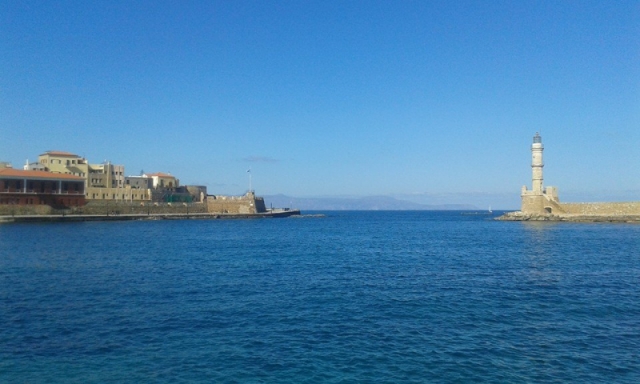
Chania, also transliterated as Hania, is the second largest city of Crete and the capital of the Chania Prefecture. It lies along the north coast of the island, about 70 km west of Rethymno and 145 km west of Heraklion. The official population of the municipal area is 53,373 but some 70,000 people live in the greater area of Chania. Most of the visitors believe that Chania is Greece`s most beautiful city... Chania is a unique city bearing a rich and long history and culture. Its name is often glorified in historical documents as the city raised brave soldiers, groundbreaking politicians, intellectuals and artists. It is considered the city of Justice and Freedom and its rare beauty justifies its characterization as the "Venice of the East". The city of Chania was a crossroad between the East and the West for many centuries, and for this reason it was claimed by its enemies and suffered the presence of many conquerors. Always the first thing you hear about Chania - the Venetian Harbour, the old port, the narrow shopping streets and waterfront restaurants. Chania is also one of the places you are most likely to see on arriving in Crete. It is beautiful - that is to say much of the Chania you will want to see is clustered close to the harbour - old buildings, museums, churches and crafts shops (some with genuinely interesting and sometimes local, products on offer). Food is offered in great variety and sometimes great similarity - there are many restaurants and also cafes, at which to reflect upon the experiences of places you have just explored together with the enjoyment of some tasty food - we have suggestions for restaurants further on. The atmosphere has a touch of Florence and Venice (a few years ago when those cities still had some room to walk), combined with the culture and character of Cretan people and traditions. The Chania harbour is wonderful and at any particular time of day the light produces a different result, creating a "different place". This is the best chance to see some of the old buildings - of Venetian and Turkish design, that Crete once had across the island - many have since been destroyed by the ravages of war and plunder. Chania is surrounded by numerous rich options for sightseeing, exploration and discovery. Mountain villages provide a view into the "inner Crete". The Samaria and many other gorges can be hiked, archaeological sites abound. What to see at the city Explore the waterfront and streets just behind. Walk along the harbour wall to the Venetian Lighthouse. Visit the wonderful Naval Museum (Maritime Museum) - it delivers a superb introduction to the History of Crete and is by no means only for maritime mavens, you will learn more here in half an hour than most could teach you, about the events that filled Crete's moving past. Excellent, well done. Open: 10.00 to 14.00 daily, except Monday. Tel: 28210-91875. Admission: 2.50 euros. The Archaeological Museum on Halidon Street is smaller than its grand Heraklion cousin, though well worth visiting and appealing even to non archaeologists. Open: 8.00 to 17.00 (to 19.30 April-October) daily, except Monday. Tel: 28210-90334. Admission: 1.5 euros Historical Archives (museum): Open 9.00 to 13.00, Monday to Friday. Tel: 28210-52606. Admission: Free. Byzantine Museum. Open: 8.30 to 14.00 daily, except Monday. Tel: 28210-96046. Near the waterfront (at the back of the Naval museum). Outside Chania; trips to the many surrounding monasteries, the Samaria Gorge (take a bus to Omalos or a tour as you will walk the Gorge, take a ferry from the end at Agia Roumeli to Sfakia and then a bus back to Chania), Venizelos Graves and visit nearby villages where the old men talk, argue, discuss, play cards at their local kafeneio or simply find a stretch of beach and immerse the cares of yesterday in the waters of today. With children you might treat them with a visit to the water park at Limnoupolis. Rethymno, Crete's other Venetian town is an hour away by car or bus. The Therissos gorge, Kolymbari and its monastery, the wide sweep of Falassarna beach, boat trips to Gramvousa & Balos, a longer and most scenic trip to Elafonissi and villages en route - the list is long enough to fill many days. (all information can be changed without prior notice) Historical facts about Chania The Historical Years During the so called Historical Years, Kythonia seems to have been a powerful city-state, whose domain extended from Hania Bay to the feet of the White Mountains. Kythonia was constantly at war with other city-states such as Aptera, Falasarna nad Polyrrinia. In 69 B.C. the Roman Consul Cointus Metellus defeated the Cretans and conquered Kythonia to which he granted the privileges of an independent city-state. Kythonia reserved the right to mint its own coins until the 3rd century A.D. The Roman conquest put an end to the civil wars and a period of peace began, unique in the history of the island. The Kythonia of the Historical Years was of the same size as the city of Hania at the beginning of the 20th century. First Byzantine Period Information about the Kythonia of the Christian Years is limited. The most important archeological finds are those of the remains of a Basilica, discovered recently near the Venician Cathedral in the centre of Kasteli. Various sources mention the Kythonia Diocese and the Bishop Kythonios, who participated in the Sardinian Synod in 343. Kythonia is mentiond among the 22 most important cities of Crete in the "Document of Ieroklis" in the 6th Century. The Kytonia Diocese is also mentioned in all the "Ecclesiastical Minutes" (taktica), before and after the Arabian Occupation. The Arabian Occupation The occupation of Crete by the Arabs was effected gradually from 821 to 824. The consequences of the arrival of the Arabs in Crete were rather painful for the local population, who were subjected to a long and horrible period of slavery, resulting in the alienation of Crete from the Byzantine empire. St. Nicholas Stouthitis was born in 763 in Kythonia, which he left at the age of 10 to go to Constantinople. In 961, Nikiforos Fokas managed to free Crete and bring it back under the control of the Byzantine empire. The Byzantine Period The first action of the Byzantine empire, after reconquering Crete, was to re-establish their authority and power. Not only should all traces of the Arab occupation be abolished but also the defense of the island had to be organised quickly in order to avoid any Arab attempt to take back the island. Thus, strong fortifications are constructed along the coast and at strategic positions. The hill of Kasteli is fortified with a wall along its perimeter. This was constructed with building materials taken from the ancient city. It is still regarded as a remarkable military accomplishment and a proof of the continuous existence of the city in the period between the Arab and the Venician occupations. The Venician Occupation After the 4th Crusade and the dismantling of the Byzantine empire, in 1204, Crete is given to Bonifacio, the Marquis de Monfera. He, in turn, chooses to sell it to the Venicians for 100 silver marks. In 1252 the Venicians manage to subdue the locals as well as the Genoans, who, under the leadership of the Count of Malta Henrico Pescatore, had seized Crete. Hania is chosen as the seat of the Rector (Administrator General) of the region and flourishes as a significant commercial centre due to the fertility of the land. Contact with Venice leads to the social, economic and cultural conditions necessary for the growth of a culture strongly affected both by the Venician and the local element. The Turkish Occupation The Turks land near the Monastery of "Gonia" (Corner) in Kissamos, which they plunder and burn. They seize the fortified isle of "Agioi Theodori" and, after a two month siege, the City of Hania on 2nd August 1645. A new state of affairs prevails in the city, where churches are turned into mosques and Christian fortunes come to the hands of the conquerors. The Turks reside mostly in the eastern districts, Kasteli and Splanzia, where they convert the church of St Nicholas of the Dominicans into their central mosque "Houghiar Tzamissi" (The Sovereign's Mosque). Besides turning catholic churches into mosques, they build new ones such as "Kioutsouk Hassan Tzamissi" on the harbour. They also build public baths (Hamam) and fountains. In 1821 many Christians are slaughtered and the Bishop of Kissamos, Melhisethek Thespotakis is hanged in Splantzia. In 1878, the Treaty of Halepa is signed and the Christians are granted certain rights. In 1898, the semi-autonomous "Cretan State" is established and the city of Hania flourishes as the Capital of Crete.

The 1866 Square in Chania is located on the west part of the city, on the way to the "Kisamos" exit. This Square is one of "green" areas of the city, with many plants and statues of the heroes of the Cretan revolutions and an elegant Arabic fountain.Its name refers to the grand and bloody 3-year Cretan revolution (1866 - 1869) against the Turks, which resulted to the holocaust of "Arcadi". On the northwest side of the plateau, next to the hotels "Samaria" and "Omalos", there is the public bus station (KTEL) of the city.
The bus station offers a large network of destinations with modern buses, which connect Chania with Heraklion, Rethymnon, other towns and villages of the Chania Prefecture, as well as to other cities of Greece (Athens, Lamia, Larisa, Thessaloniki, Korinthos, Patra, Ioannina, Mesologi, ect).


ΔΙΚΑΣΤΙΚΟ ΓΡΑΦΕΙΟ ΧΑΝΙΩΝ (ΤΡΑΠΕΖΑ ΝΟΜΙΚΩΝ ΠΛΗΡΟΦΟΡΙΩΝ )
Ανδρέα Παπανδρέου 65 ΤΚ731 00
Τηλέφωνο:28213 45700, 28210 27620, 28210 50522 28210 50522,
Φαξ: 28210 27620


Στη βόρειο-ανατολική πλευρά του Δημοτικού Κήπου βρίσκεται το εντυπωσιακό Ρολόι της πόλης, το οποίο άρχισε να χτίζεται το 1924 και τέλειωσε το 1927 και το οποίο αποτελεί ένα από τα πιο αξιοσημείωτα κτίσματα της πόλης των Χανίων.


Προμαχώνας Lando ή Schiavo ή Αγίου Δημητρίου
Ο προμαχώνας αυτός καλύπτει τη νότιο-δυτική γωνιά των ενετικών οχυρώσεων και πήρε το όνομα του από την ομώνυμη ορθόδοξη εκκλησία του Αγίου Δημητρίου που υπήρχε στην περιοχή «Κρύο Βρυσάλι». Ο ομώνυμος κυκλικός επιπρομαχώνας, διατηρείται εξολοκλήρου με αρκετές ανακατασκευές στην κορυφή του οποίου αποκαλύφθηκε μετά από ανασκαφική έρευνα το parapetto και οι κανονιοθυρίδες. Η 13η εφορεία Βυζαντινών Αρχαιοτήτων πραγματοποίησε την αποκατάσταση του επιπρομαχώνα.


The War Museum of Athens founded a department in 1995, in the framework of a cooperative program between the two cities and museums.
The aim of the Museum is the collection, protection, conservation and exhibition of war artifacts and other items, mainly from the period 1821-1940 that covers most of the national wars and revolutions, including the participation of Cretan soldiers in the Macedonian Wars (1903 - 1922) in the Balkan Wars (1912-13), the Asia Minor Campaign (1919-1922), in the World Wars I and II and during the German occupation (1941-1945).
Tel: (2821) 0 44156


Η Ιερά Πατριαρχική και Σταυροπηγιακή Μονή Χρυσοπηγής ιδρύθηκε στα Χανιά κατά την τελευταία περίοδο της Βενετοκρατίας (τέλη 16ου αιώνα) και είναι αφιερωμένη στην Παναγία την Ζωοδόχο Πηγή. Κάθε χρόνο δέχεται χιλιάδες προσκυνητές από την Ελλάδα και το εξωτερικό που συρρέουν από ευλάβεια για να προσκυνήσουν τη θαυματουργή εικόνα της Παναγίας.
Στο πέρασμα των αιώνων το μοναστήρι γνώρισε περιόδους άνθισης και παρακμής. Δέχτηκε πολλές επιδρομές και υπέστη σοβαρές καταστροφές από τους Τούρκους και Γερμανούς κατακτητές της Κρήτης. Η Μονή υπήρξε ανδρική μέχρι το έτος 1976, οπότε και μετατράπηκε σε γυναικεία και αναστηλώθηκε εκ θεμελίων.

Χαρακτηριστικό ειδικό κτίριο των τελευταίων χρόνων της Τουρκοκρατίας στην Κρήτη, επηρεασμένο μορφολογικά από τα μεγαλοπρεπή νεοκλασσικά κτίρια των μεγάλων αστικών κέντρων. Έχει οργανωθεί με αυστηρούς άξονες συμμετρίας που διακρίνονται τόσο στις κατόψεις του όσο και στην μορφολογία των όψεων. Το κτίριο απαρτίζεται από πτέρυγες οι οποίες, σε σύνθεση ελεύθερου ορθογωνίου, δημιουργούν εσωτερικό αίθριο και συγχρόνως ελεύθερες διελεύσεις προς άνω, οι οποίες διανοίγονται στην πρόσοψη του κτιρίου.
Άρχισε να κτίζεται στο τέλος του 19ου αιώνα ως Τουρκικό Στρατιωτικό Νοσοκομείο. Το 1900 αποπερατώθηκε ο πρώτος όροφος και αφού εγκαταστάθηκαν οι δικαστικές αρχές εξωραΐζεται με μαρμαροστρώσεις και διαμόρφωση του περιβάλλοντα χώρου. Το 1936 μετά από πυρκαϊά αναστηλώνεται και προστίθεται ο 3ος όροφος του κεντρικού κτιρίου. Έχει χαρακτηριστεί ως διατηρητέο Μνημείο.
Έχουν γίνει εργασίες επισκευής και συντήρησης το 1984, διαμόρφωση περιβάλλοντος χώρου το 1988 και το 1990 έργα συντήρησης και αποκατάστασης.
ΔΙΕΥΘΥΝΣΗ Π.Ε. ΧΑΝΙΩΝ
Δ/νση: Ιωσήφ Γκερόλα 48Β, 73132 Χανιά
Τηλ: 28210-47300
Fax: 28210-47301


 Σύνδεση με
Facebook
Σύνδεση με
Facebook