



 Upload your photos for Gaidaros and share them with us!
 Press here.


 Address:
 Telephone:




Places near Gaidaros


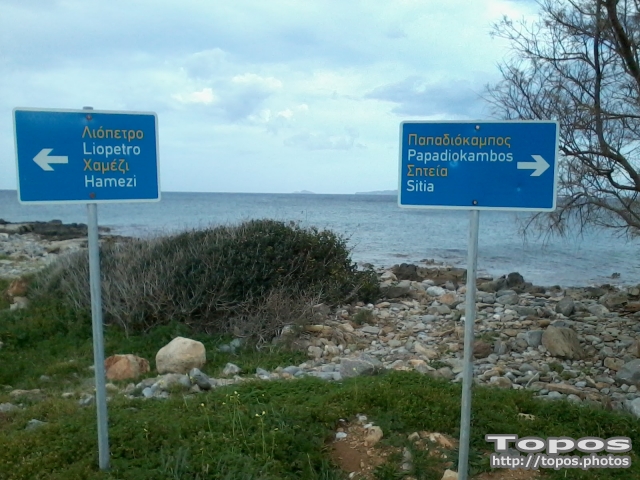
In Papadiokambos you’ll meet a long beach with large stones and rocks and an archaeological site. In some places a few bays with pebbles are formed, where you can swim. The only sure thing is that you’ll be alone, since the place is completely secluded. There is almost no infrastructure around, so be sure you have supplies with you.
Papadiokambos’ strong winds and big waves keep most visitors away. This, however, even in winter attracts the lovers of windsurfing. Papadiokambos (known by windsurfers as Faneromeni) is one of the best spots for wave sailing in Greece. Wave sailing is one of the most striking aspects of the sport. The area has strong currents, large waves 3-4m high and has actually no beach. Some places are very dangerous and you should be very careful and in advanced level, so as not to break your equipment on the rocks.



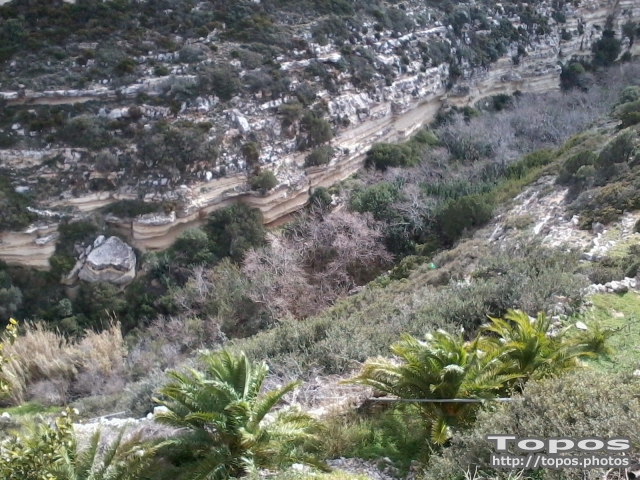


Drive west out of Sitia on the main road to Agios Nikolaos. The marked exit to the Faneromeni Monastery is on the right. There are two exits a few kilometers apart that meet in the middle. The monastery is reached after a signposted, 30-minute drive on a good dirt track. When you reach the sea, continue along the road as it climbs uphill for about 2km from the sea. The monastery is perched dramatically on the edge of a canyon. The monastery is perched dramatically on the edge of a canyon. Faneromenis Sitia Monastery Faneromenis Sitia Monastery and the area Faneromenis Sitia Monastery and the Agii Pandes Gorge The name of the monastery (Faneromeni, "revealed") was taken from an icon of the Virgin which was found in a small cave beside the church. The frescoes in this small fourteenth century monastery church are dated 1455 and were blackened by smoke when the church was set on fire to by the Turks.There is an inscription commemorating renovations on the monks cells in 1624. Faneromenis Sitia Monastery


Valuable information on the daily life of a Minoan farmers family and fishermen in Papadiokampos, 10km west of Sitia, just before the great catastrophe reveals the archaeological research conducted in the region.
The excavation revealed what exactly did those who lived there just before leaving everything. On the plate was a pot with barnacles, crushed snails and crabs, which broke and its contents scattered around the floor. Two large flat stones near the fireplace was probably seats. In the courtyard of the house was a platter with barnacles, which the minoans probably eaten raw. Even on the corner room was found 2 kilos of "fresh" snails and everything else found in the cooker and the floors were broken. We assume that someone picked them that moment from the sea and left the basket to the corner.Equally impressive were the results from the study of animal bones.It seems that the inhabitants had to leave suddenly, leaving their food in the middle. The only one who stayed behind was the guardian of the house, the dog, which is buried under the rubble.
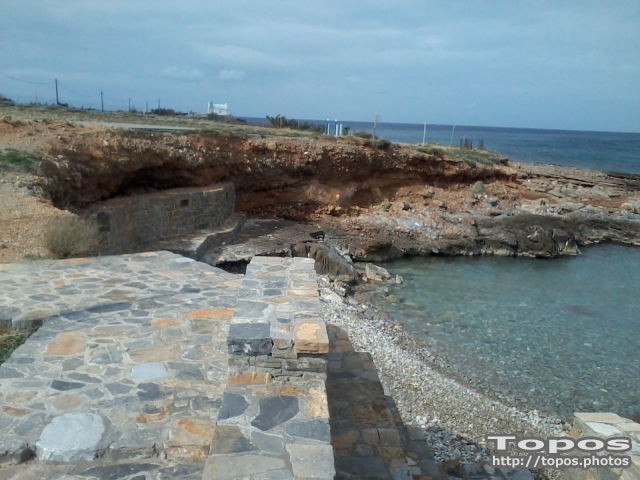

2km after Skopi, just before the monastery, two neighboring small pebbly beaches are shaped with crystal clear waters.
The first, known as Platani, hosts a small picturesque tavern, while the second, known as Agioi Pantes is totally secluded.
The beaches are formed at the exit of two lush canyons, running parallel to each other. One of them is the Agii Pandes Gorge. Indeed, near the coast there are many plane trees, which give their name to the region (Platani means plane tree). The area is totally undeveloped and is ideal for seclusion and quiet swimming. Finally, the area west of the Cape Trahilos, called Papadiokambos, is considered an ideal spot for windsurfing.


 Login with
Facebook
Login with
Facebook