



 Upload your photos for Agia Irini and share them with us!
 Press here.


 Address:
 Telephone:




Places near Agia Irini
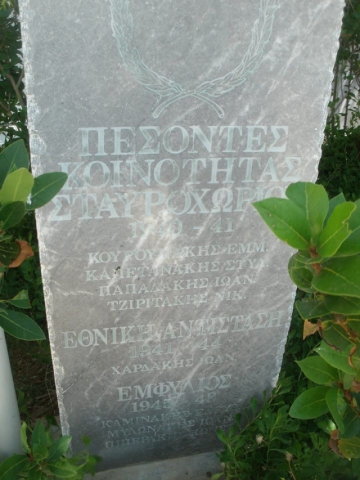

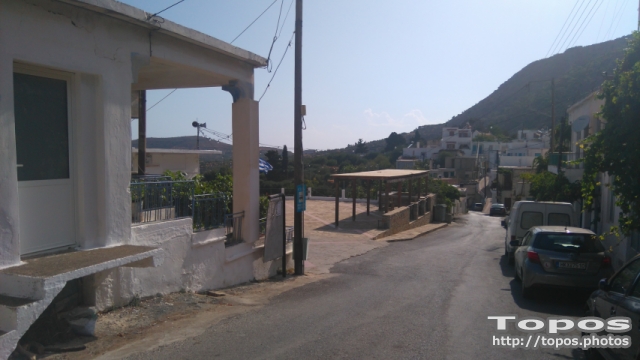
Historic village of Lasithi plateau, famous for its 24 churches and festivals commemorating the Saints made all year. Built at an altitude of 313 metres in central position between the other villages in the area which played a decisive role in later course.
The population of the village is 147 inhabitants (census 2011), 227 inhabitants (census of 1583) name is derived from a variant of the old one which was Strabodoxari, a name that perhaps comes from the crooked bow of Liras a legendary musician of the village, as some believe, but for the name there are other interpretations. Some have reported that the original name is due to the fact that the image of the village from afar looks like a crooked bow, while it is recorded that Strabodoxaris, was the first settler of the village after the liberation of Crete from the Nikifwro Foka in 961 ad.
The picturesque narrow sokakia of Stavrochori intersect in small and picturesque square in the Centre of the village. There they are now most cafes there was once the Centre of the village is part of a series of other, per 300 meters were exposed to the sea, to warn residents about the invasions of conquerors-signs of turbulent history. Of special interest are the numerous churches and chapels in the area, the number 24. The many festivals that are held throughout the year in memory of the Saints gather the villagers of Stavrochori back into parts, with the most famous of these to become the 15th at the monastery of Panagia of Ligia. The picturesque Church of Agios Konstantinos South Village singles built next to a waterfall that runs almost all the time creating images of rare beauty.
The local community Stavrochori, belong also the Tsikkalaria, a dependency of the region, which took its name from the pitcher, but now construction has been abandoned and no longer in the region have built luxury buildings for tourist exploitation.
One kilometre east of Stavrochori, lies the village of Lapithos, which left only 25 inhabitants (census 2011), also old and historic village of something that can be seen from a source dated 1779. It is believed that the name he took from the ancient tribe of Thessaly, Lapithes Greek mythology related with the Centaurs.


This village on the road to Stavrohori is about 25 km from Sitia (South West) .
It is divided into two groups of houses called Apano Kria and Kato Kria. In the Venetian census of 1583 it was listed as Cria with 176 inhabitants.
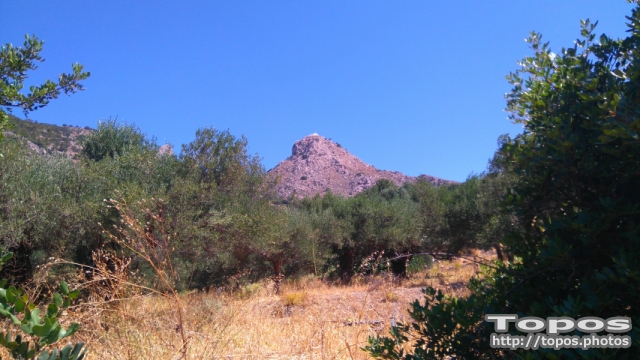
The local people pronounce the name «Kriya» and insist that as it gets very cold there in the winter months the name of the village reflects the climate, (krio: cold), and it seems quite likely that this is the true origin of the name. Above Kato Kria, on the hill called Trapeza, traces of ancient ruins are to be found. Near the village, on the hill of Agios Georgios, next to the chapel after which the hill has been named, are the remains of Late-Roman water cisterns. The top of this hill is surrounded by the walls of a Venetian fortress known as Monte Forte. The Venetians must have built it in the 13th or 14th century ΑD for the protection of the lahds they had seized. It is contemporary with the forts of Sitia, Liopetro, Agios Stephanos and Voila.
Ιn 1971 eχcavations were started on a group of graves at Tsachali, a deserted spot on the lower slopes of the hill; the dig was completed in 1977. It proved to be a cemetery of the Sub-Minoan and Protogeometric periods. There were many unpillaged graves but the grave-goods were generally of poor quality. Α complete stone-lined tomb with its funerary pithos and human remains was removed and is on display in the Agios Nikolaos Museum. This of course was a task requiring patience, precision and skill. Some of the walls of the mosque are still standing at Kato Kria. Not far away was the settlement of Visas, listed in 1583 as Visia with 107 inhabitants - today it is only ruins.
From the book "Sitia", N.Papadakis, Arcaeologist,1983


Thirty kilometers east of ierapetra, is the municipal unit of San Stefano that besides the picturesque village includes the popular tourist resort of makrigialos. The settlement's Population is 131 inhabitants (census 2011), 305 inhabitants (census of 1583).
Built on a hill in 453 m altitude the picturesque village of Agios Stefanos is a prime example of mountain culture of the Cretan people. Its privileged location offers unique views of the Libyan Sea and the mountains of Thryptis while less than six kilometres inhabitants and visitors can enjoy the popular beaches of Makris Gialos.
The older will remember the settlement with the name ' Old ' name for the origin, there are different interpretations, with most believing the present name owes to the impressive church of Saint Stephen, who is known for its distinctive architecture, the Interior and exterior decoration. This is the main reference point of the village, with the small square on the side of to gather in cafes of the villagers. Agios Stefanos distinguishes for its dense building and winding cobblestone streets. Somewhere in there you will find the Kimeri, the old (and now restored) source of the village with the characteristic arch, in troughs which women washed their clothes seasons that the water had not reached even in homes of the village.
On the rough and steep hill at the top of the village, once stood the ' Kastelos "or" Fortezza ". A, ruined, Venetian fortress which is believed to have been built on the foundations of the Citadel, probably of geometric times, and according to the legends of the village was devastated by the raids of the notorious pirate Blackbeard. Although the area does not have become systematic excavations, findings suggest that inhabited from the 9th century BC. Due to the increasing tourism development of makrigialos launched the Decade of the 80 's, many villagers of Agios Stefanos fled the region moving in more "fertile" seafood lands, though nowadays Aghios Stefanos is a mountainous village that comes rapidly. Main cause is-re-discovery of the beauty of the village of tourists who flooded every summer around coastal areas. Dozens of foreigners--mainly northern Europeans-who appreciated the special charm of the area and the mild climate, buying homes and land, moving either occasionally or permanently in Agios Stefanos, giving a more vivid color to the area. The summers the population more than doubled and the area comes alive.
The cafes in the area host all sorts of events from parts of haggling the day up nights learning lyre and bouzouki for foreigners in the region. A characteristic example is Philippe from Belgium, who once traveled in search of Crete, came to stay permanently in Agios Stefanos to erect its own small Observatory, which everyone now can enjoy the starry sky throughout the year.

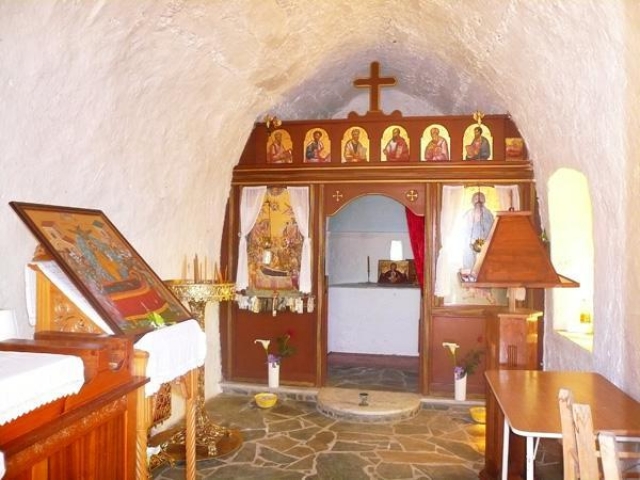

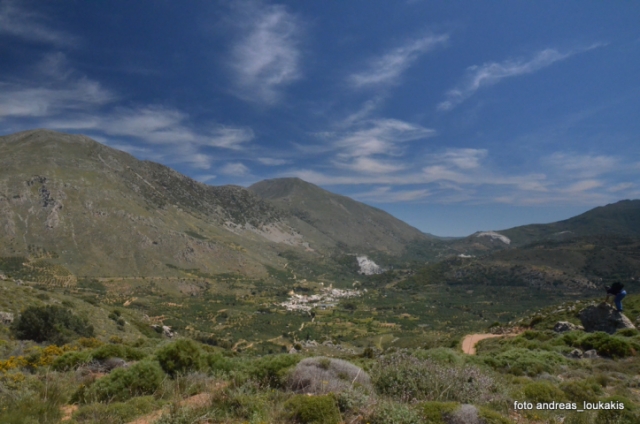
Until 1955 this village was known by its old name Roukaka, which must be of Turkish or possibly Arabic origin.
It is situated on the road that runs from Sitia via Achladia to Stavrohori and is not far from this last, among the foothills of the mountain Koprokefala and about 30 km from Sitia. Castrofylaca listed it for the 1583 Venetian census as Rucaca with 262 inhabitants.
During the years of the Turkish occupation it was a village with one of the biggest Ottoman populations and it had a large mosque. Ιπ 1866 Roukaka was the base for the Administrative Revolutionary Council of the notables of the Sitia District.
Chrissopigi Village Chrissopigi Village - area
Hiking from Chrissopigi to Bebonas Village 5 km far Hiking from Chrissopigi to Bebonas Village 5 km far
Later, in 1897 when the Turks of the village were surrounded by Christian revolutionaries they were saved by the intercession of Ambrosios the Metropolitan of Ierositia Ierapetra and Sitia) who came supported by a trqop of French sailors.
Chrisopigi Village in Sitia - East Crete Chrisopigi Village in Sitia - East Crete
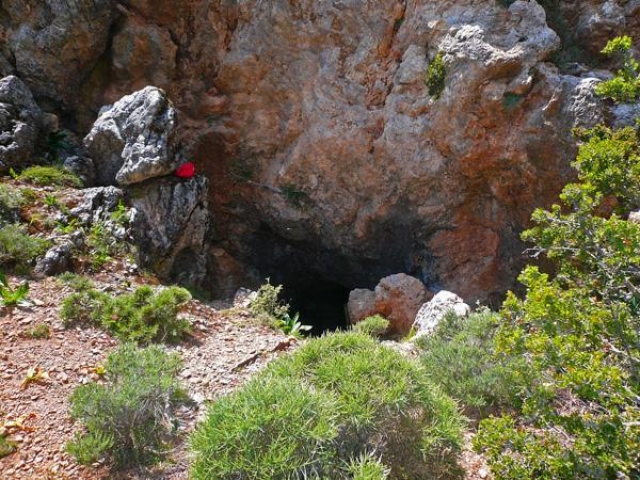
The cave Theryiotripa is in the area belonging to the community, as is also the hamlet Pebonas (or Bebonas) to the west of the village near the border of the District.
From the book "Sitia", N.Papadakis, Arcaeologist,1983

Πηγή:
«Πεύκοι “Τόπος και Ιστορία”», Γεωργίου Θ. Καναβάκη (Καναβογιώργη), Έκδοση Κοινότητας Πεύκων, Ιούλιος – Αύγουστος 1994

This village on the road to Stavrohori is about 25 km from Sitia (South West) .
It is divided into two groups of houses called Apano Kria and Kato Kria. In the Venetian census of 1583 it was listed as Cria with 176 inhabitants.
The local people pronounce the name «Kriya» and insist that as it gets very cold there in the winter months the name of the village reflects the climate, (krio: cold), and it seems quite likely that this is the true origin of the name. Above Kato Kria, on the hill called Trapeza, traces of ancient ruins are to be found. Near the village, on the hill of Agios Georgios, next to the chapel after which the hill has been named, are the remains of Late-Roman water cisterns. The top of this hill is surrounded by the walls of a Venetian fortress known as Monte Forte. The Venetians must have built it in the 13th or 14th century ΑD for the protection of the lahds they had seized. It is contemporary with the forts of Sitia, Liopetro, Agios Stephanos and Voila.
Ιn 1971 eχcavations were started on a group of graves at Tsachali, a deserted spot on the lower slopes of the hill; the dig was completed in 1977. It proved to be a cemetery of the Sub-Minoan and Protogeometric periods. There were many unpillaged graves but the grave-goods were generally of poor quality. Α complete stone-lined tomb with its funerary pithos and human remains was removed and is on display in the Agios Nikolaos Museum. This of course was a task requiring patience, precision and skill. Some of the walls of the mosque are still standing at Kato Kria. Not far away was the settlement of Visas, listed in 1583 as Visia with 107 inhabitants - today it is only ruins.
From the book "Sitia", N.Papadakis, Arcaeologist,1983






Πηγή:
«Πεύκοι “Τόπος και Ιστορία”», Γεωργίου Θ. Καναβάκη (Καναβογιώργη), Έκδοση Κοινότητας Πεύκων, Ιούλιος – Αύγουστος 1994
The name certainly comes from the plant (Dafni: laurel or bay tree). It is entered as Dafni with 187 inhabitants ?π the 1583 Venetian census. The 60 Turkish families who lived in Daphni belonged to the sect of Αli, adopted son and son-in-law of Mohamet, and were the most fanatical in the whole district, abhorred even by the more orthodox members of their own religion. Christians in the village and any Greeks passing that way underwent the most horrible sufferings. Thus when in 1897 the Christians surrounded the Turks in the mosque of the village, they showed nο clemency and, having killed 130 in the mosque, they later rounded up another 30 who had escaped and were hiding in the cave οn the mountain Kopro Kefala in the Kria district.
From the book "Sitia", N.Papadakis, Arcaeologist,1983




 Login with
Facebook
Login with
Facebook