Map
Photos
Info
Near
All


Center map to
my position.
Your Position:
Unknown
Λεπτομέρειες ΕικόναςImage details
More Photos
Upload your photos for ΠΕΡΙΦΕΡΕΙΑ ΚΡΗΤΗΣ-Κ003 - ΔΕΚΕ, ΔΔΕ and share them with us!
Press here.
ΠΕΡΙΦΕΡΕΙΑ ΚΡΗΤΗΣ-Κ003 - ΔΕΚΕ, ΔΔΕ
Category: Administration

Address:
, Suggest

Telephone:
, Suggest


Rate ΠΕΡΙΦΕΡΕΙΑ ΚΡΗΤΗΣ-Κ003 - ΔΕΚΕ, ΔΔΕ
Average: --
1
2
3
4
5
Αναφορά ως:
Report

Your Opinion
If you want to tell us your opinion about this place, please leave a comment

Post a Comment:

ΠΕΡΙΦΕΡΕΙΑ ΚΡΗΤΗΣ-Κ003 - ΔΕΚΕ, ΔΔΕ


ΠΕΡΙΦΕΡΕΙΑ ΚΡΗΤΗΣ-Κ003 - ΔΕΚΕ, ΔΔΕ

Places near ΠΕΡΙΦΕΡΕΙΑ ΚΡΗΤΗΣ-Κ003 - ΔΕΚΕ, ΔΔΕ


Archeological Museum of Heraclion
Archeological Museum of Heraclion 9298 hits
 
The Herakleion Archaeological Museum is one of the largest and most important museums in Greece, and among the most important museums in Europe. It houses representative artefacts from all the periods of Cretan prehistory and history, covering a chronological span of over 5,500 years from the Neolithic period to Roman times. The singularly important Minoan collection contains unique examples of Minoan art, many of them true masterpieces. The Herakleion Museum is rightly considered as the museum of Minoan culture par excellence worldwide. 
 
The museum, located in the town centre, was built between 1937 and 1940 by architect Patroklos Karantinos on a site previously occupied by the Roman Catholic monastery of Saint-Francis which was destroyed by earthquake in 1856. The museum's antiseismic building is an important example of modernist architecture and was awarded a Bauhaus commendation. Karantinos applied the principles of modern architecture to the specific needs of a museum by providing good lighting from the skylights above and along the top of the walls, and facilitating the easy flow of large groups of people. He also anticipated future extensions to the museum. The colours and construction materials, such as the veined polychrome marbles, recall certain Minoan wall-paintings which imitate marble revetment. The two-storeyed building has large exhibition spaces, laboratories, a drawing room, a library, offices and a special department, the so-called Scientific Collection, where numerous finds are stored and studied. The museum shop, run by the Archaeological Receipts Fund, sells museum copies, books, postcards and slides. There is also a cafe. 
 
The Herakleion Archaeological Museum is a Special Regional Service of the Ministry of Culture and its purpose is to acquire, safeguard, conserve, record, study, publish, display and promote Cretan artefacts from the Prehistoric to the Late Roman periods. The museum organizes temporary exhibitions in Greece and abroad, collaborates with scientific and scholarly institutions, and houses a variety of cultural events.
 
History
The first archaeological collection of the town of Herakleion was constituted in 1883 with the initiative of the local Philekpaideutikos Syllogos (Association of Friends of Education), which was headed by the doctor and antiquarian Joseph Chatzidakis. Chatzidakis also obtained permission from the Ottoman authorities to establish the first 'archaeological service'. The collection was housed inside two rooms in the courtyard of the cathedral of Agios Minas, and by 1900 was enriched with private donations, new acquisitions and finds from the first small excavations and surface surveys. After large-scale excavations began on the island in 1900, the archaeological collection came to include the first important finds from these. Around that time the museum was ceded to the newly established Cretan state and was subsequently moved to the barracks building of the modern nome of Herakleion under the first Keepers of Antiquities Joseph Chatzidakis and Stephanos Xanthoudidis. 
 
The first display room was built in 1904-1907 over the remains of the famous Venetian monastery of Saint Francis, next to the Hounkiar Djami. The antiquities' collection was moved there after the addition of a second room in 1908. In 1912, this small building was given a Neoclassical appearance with the construction of a west wing designed by architect Wilhelm D?rpfeld and Panagis Kavvadias, Secretary of the Athens Archaeological Society. The collection continued to be enriched by the finds from the great excavations by Greek and foreign archaeologists. 
 
The construction of the current museum began in 1937 on plans by architect Patroklos Karantinos. During the Second World War the museum's antiquities were at great risk, but they were saved thanks to the exertions of Professor Nikolaos Platon. Platon supervised the re-exhibition of the museum's treasures and the museum opened its doors to the public in 1952. The display illustrated the chronological development of Minoan civilization, the history of archaeological research and of the great discoveries on Crete during the early twentieth century (Knossos, Phaistos and Malia palaces etc), and the prevalent theories on Aegean Prehistory. In 1962 the museum bought the collection of the Cretan doctor Stylianos Giamalakis, which was displayed on the first floor. In 1964 the new wing was added to the building and the museum's director Stylianos Alexiou subsequently completed the exhibition. In 2000 the museum acquired the Nikos Metaxas collection, part of which will soon go on display. 
 
In 1987 the building received new electricity, air conditioning and fire protection installations, and the skylights in the display rooms were replaced with false ceilings and artificial lighting. A new refurbishment based on plans by architect Alexandros Tombazis began in 2002; it will include the re-opening of the original skylights, new electro-mechanical installations (air conditioning, lighting, security, fire protection etc) and a new wing of storerooms to the north of the building. It will also highlight the remains of the Venetian church of Saint Francis on the east side of the atrium.
 
 
Exhibitions
The permanent exhibition of the Herakleion Archaeological Museum
The collections of the Herakleion Archaeological Museum include unique works of Cretan art, found in excavations across the central and eastern part of the island and which cover a chronological span of roughly 7000 years, from the Neolithic (7000 BC) to the Roman period (3rd century AD). Most objects date to prehistoric times and to the so-called Minoan period, named after the island's mythical king, Minos. They include pottery, carved stone objects, seals, small sculpture, metal objects and wall-paintings, which were discovered in palaces, mansions, settlements, funerary monuments, sanctuaries and caves. 
 
After the completion of the new exhibition project in April 2014, the exhibition occupies a total of twenty seven rooms. Several important themes, such as Minoan wall-paintings are presented separately from the overall chronological sequence. The objects give a complete image of Cretan civilization, as it developed in different regions and important centres. Social, ideological and economic aspects form the core of the display, with a strong focus on religious and ceremonial practices, mortuary habits, bureaucratic administration and daily life. Explanatory texts, photographs, drawings and models of monuments supplement the exhibition.
 
Makasi Gate
Makasi Gate 6132 hits

The Gate Makasi (meaning "switchman" in Turkish) is a military gate of the Venetian Walls of Heraklion, the gallery of which had a length of 110 meters. The gallery leads to the eastern low square of Martinengo bastion, that housed the canons that protected the bastion Bethlehem.
The gallery is used as a memorial for the National Resistance in Crete, as here the Germans imprisoned hundreds of locals in the Second World War. On July 15, 1943, when the so-called Big Blockade of Crete took place, dozens of Christians and Jews were captured and imprisoned here.
On November 4, 1943, many prisoners were transferred to Mauthausen concentration camp, while other 600 boarded on June 8, 1944 in Tanais ferry to Piraeus. However in the open sea, the Germans got rid of the 600 souls by sinking the ship and then announced that the British navy sank ship. The Germans never paid for these atrocities, just like all such stories in Crete.

Parking
Parking 5369 hits

ΚΕΠ ΝΟΜΑΡΧΙΑΚΗΣ ΑΥΤΟΔΙΟΙΚΗΣΗΣ ΗΡΑΚΛΕΙΟΥ

Image Coming Soon
ΤΜΗΜΑ ΠΟΙΝΙΚΟΥ ΜΗΤΡΩΟΥ ΕΙΣΑΓΓΕΛΙΑΣ ΠΡΩΤΟΔΙΚΩΝ ΗΡΑΚΛΕΙΟΥ 5064 hits

ΤΜΗΜΑ ΠΟΙΝΙΚΟΥ ΜΗΤΡΩΟΥ ΕΙΣΑΓΓΕΛΙΑΣ ΠΡΩΤΟΔΙΚΩΝ ΗΡΑΚΛΕΙΟΥ

Image Coming Soon
Panagitsa Mastaba 4431 hits

The temple of Panagitsa is located in the area of Mastabas in Heraklion. It was built in 1922 by refugees from Asia Minor, who came to Crete.


The temple is dedicated to the Assumption of the Virgin Mary and on its feast day on August 15th, it is honored by the inhabitants of the city and surrounding areas.

Jesus Gate
Jesus Gate 4372 hits

Jesus Gate (also known as the new Gate) was one of the central gates of Chandax during the Venetian period. It led to the southern provinces and that is also whera thw south road axis of the city ended, the Evans Street of today.

The gate, work of Michele Sanmicheli, is one of the finest examples of Renaissance architecture in the city and is particularliy distinguished for its monumental facade. On each side of the main gate are other openings that correspond to windows and secondary entrances to auxiliary areas within the arcade and that served as ammunition warehouses and a station area for the guards. The place is reconstructed and specially designed to operate as a museum dedicated to the life and works of the great writer Nikos Kazantzakis.

With the appearance of cars in the early 20th century, an opening to the fortification was made to the east of Jesus Gate known as the New Gate, which was bridged over in 1970.
Agios Georgios Gate
Agios Georgios Gate 4274 hits

St. George gate is the gate that once connected the Venetian town of Chandaka to eastern Crete. The gate is located to the east of Eleftherias Square just below the statue of Eleftherios Venizelos.


According to an inscription, the gate is built in 1565. Its name comes from a relief decorative representation of St. George, which is today exhibited in the historical museum of the city. The gate was formerly known as Lazareto, because it led to the homonymous sanctuary, and later as Maroulas gate leading to the homonymous district.

A 43 meter-long gallery begins through the gate, which can be visited and usually hosts exhibitions, which ends at the east of Eleftherias Square.
Crusaders Monastery
Crusaders Monastery 4261 hits
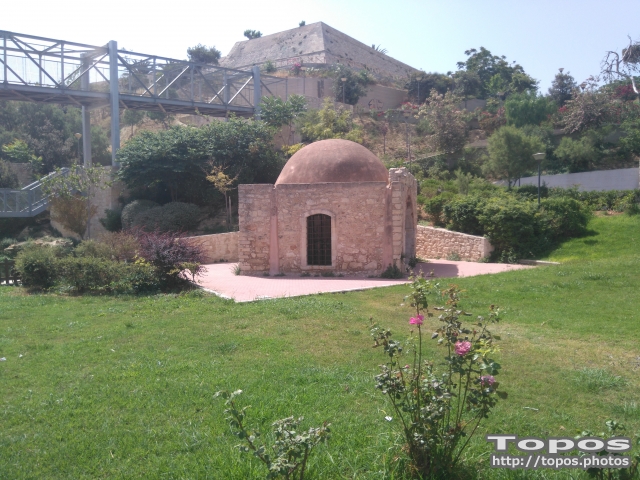
It is the Latin monastery of the Crusaders (Crosecchieri) which during the Turkish occupation was made into a mosque with the name of Angebout Pasha. It is of a basilica type with the middle aisle higher than the others. The aisles were connected to each other with two lines of columns that formed arches. The roof of the middle aisle was a two slope one and the other one of one slope.
http://www.heraklion.gr/
Image Coming Soon
Battle of Crete and National Resistance Museum 4214 hits

The Museum of the Battle of Crete and National Resistance (1941-1945) was founded by the Municipality of Heraklion in May 1994.

Church Ruins
Church Ruins 3877 hits

ΑΡΧΑΙΟΛΟΓΙΚΟ ΜΟΥΣΕΙΟ ΗΡΑΚΛΕΙΟΥ