



 Upload your photos for Krapi and share them with us!
 Press here.


Prefecture: Chania
 Address:
 Telephone:




Krapi
Krapi plateau is about 40 kilometres from Chania, at an altitude of 550 metres, and is part of the area known as Sfakia. The small plateau is located 5km before the bigger Askifou plateau, on the way to Hora Sfakion, South Crete
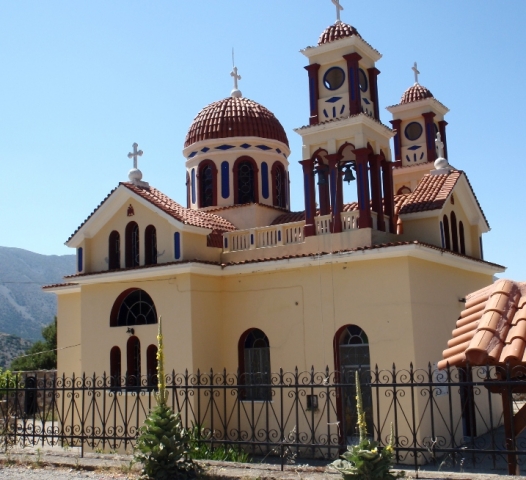
Most visitors to Sfakia will miss noticing the historical monument as they are about to head uphill towards the Katreas pass leading into Sfakia. It stands at the Krapi plateau on the left hand side of the road, where the church of Agios Ioannis Rigologos is.The monument was erected in 1986 to commemorate four of the uprisings against the Turks. In 1770 Daskalogiannis and his rebels gathered there and after celebrating Easter on the 4th of April 1770 at the church of Agios Ioannis commenced their fateful attacks against the Turks that resulted in their defeat, the destruction of Sfakia and the barbarous execution of Daskalogiannis.
In this same location on the 18th of July 1821 and at the Katreas pass just south of it a small Sfakian band of rebels routed a much larger Turkish force that had invaded Askifou and had them running to safety away from Sfakia. In 1866 the official declaration of another uprising took place in the nearby area (see next monument) and on the 10th of September 1895 a Revolutionary Congress of more than 1,000 rebels gathered there and issued their demand to the Great Powers for Crete to be freed from the Ottoman Empire. This lead to Crete gaining its autonomy a few years later, in 1898.
Places near Krapi


It is located at an altitude of 750 m, and it is 50 km from the city of Hania and 20 km from the village of Vrises. Its population is approximately 500 people. The small villages that constitute the community of Askifou are Kares, Ammoudari, Goni and Petres. The most touristically organised of them is Ammoudari with restaurants, gas station, and some rooms for rent.
The name Askifou is probably derived from the ancient word "Skifos", meaning cup, because the plateau looks like a big cup. Most of the times in winter the plateau is covered with snow. In a house in Ammoudari there is the only fir-tree in Crete The main occupation of the inhabitants is sheep and goat raising and there are many cheese dairies where the visitor can buy some excellent cheese like athotiros and myzithra. During November, in many houses they produce the famous raki, the alcoholic liquor from grapes.
The plateau receives many visitors, especially the last years, mainly passengers on their way to and from Hora Sfakion , or hikers climbing in the nearby mountains. In the plateau there is a Post Office with exchange.There are some rooms for rent and some taverns where the visitor can enjoy the famous Sfakian specialities like the Sfakian pies (cheese pies with honey) and the delicious "siglina" (pork meat smoked with aromatic herbs). A big public feast is taking place every year on the celebration of the Pentecost (first week of June) , in the chapel built on the plateau of Tauris, at an altitude of 1000 m. After the divine service, in accordance with the Sfakian customs, delicious food and excellent wine are offered to all visitors.The plateau of Askifou is considered the Thermopiles of Sfakia, because the only way to the Hora Sfakion and the surrounding coastal area is through this plateau. In Askifou, in the 21st of August 1866, met the General Congress that declared the union of Crete with the rest of Greece, and abolished the Turkish authority to Crete.From Askifou the visitor can enjoy a walk to the White Mountains. The distance from Ammoudari to the plateau of Tauris where a shelter is placed, is 7 km, and the walk through the path takes about 1,5 hours. Continuing for another 1 km. is the plateau of Niatos (altitude 1200 m) above which are the imposing mountain peaks of the White Mountains, Kastro (2218 m) and on the right Fanari (2190 m), which can be reached with a four hours climbing.

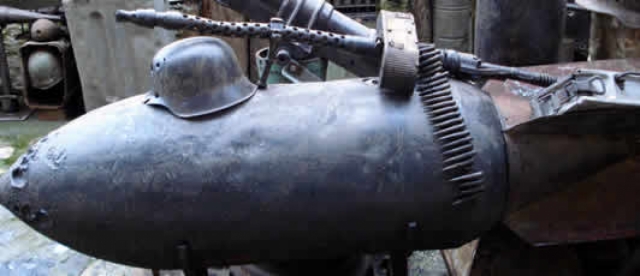

George A. Hatzidakis, a child who saw the light of life in a village of Sfakia (Askifou) on December 12, 1931 and died defeated by the disease on 12 December 2007.A few years after his birth, the German invasion on the island became a reality. The eyes of a ten years boy saw the savage face of war in wake of scattered ruins, suffering and death.
The house was one of the thousands that were destroyed by the merciless bombardment of the enemy. What is the cost but more was the loss of his younger sister. On his forehead was a large sign visible from the injury that came close to the lead in the bloody list of unjustly shed children of that war. Actually the scenes that marred experienced not only the body but the soul.
The rest of his family and himself managed to escape and find refuge a few miles farther on a village of Vamos (Georgioupolis). The war had left a question ... ... pondered the futility of ... Since there managed to fight and defend the sacred soil of the island wanted to honor the other way as a genuine Cretan to win it a few drops of immortality.
It started with a passion to collect every vestige of the battle to succeed as characteristically telling himself to keep alive the glorious memory of our ancestors and to stimulate younger to deal with their history. The collection currently lists over 2000 items for the period 1940-44 and continues to grow ever thanks to the persistent and admirable efforts of his son, Andrew G. Hatzidakis, who eventually hopes to find a way to accommodate and create a war museum worthy of their history.
http://www.warmuseumaskifou.com/

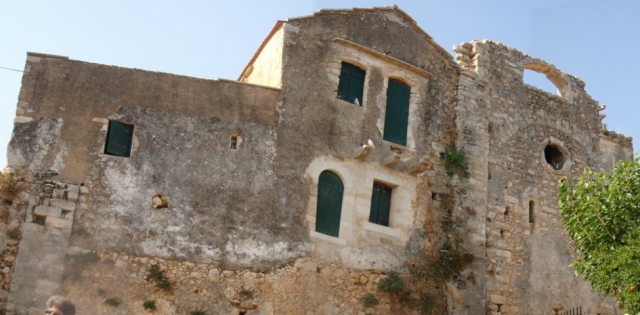


A very traditional village in Apokoronas region, west Crete, set on the side of a hill in the lower region of the White Mountains. Wonderful views to north and east of the Vrissses valley below the village, and to the south of the White Mountains.
The village has the ruins of a Venetian castle, and a quaint chapel built into a cliff face cave. The Mochlakis dairy makes lovely yoghurt and cheese, and the owner will guide you around. A mini market, a bakery, and a kafenio where the friendly locals gossip, all add to the village. A lovely rural location yet only 8 minutes by car to the amenities and National Highway in Vrisses, 12 minutes to the sandy beach at Georgioupolis, and 40 minutes to either Chania or Rethymnon.


 Login with
Facebook
Login with
Facebook