



 Upload your photos for Agii Theodori Minoan Shipyard and share them with us!
 Press here.


Prefecture: Heraclion
 Address:
 Telephone:




Agii Theodori Minoan Shipyard
Places near Agii Theodori Minoan Shipyard
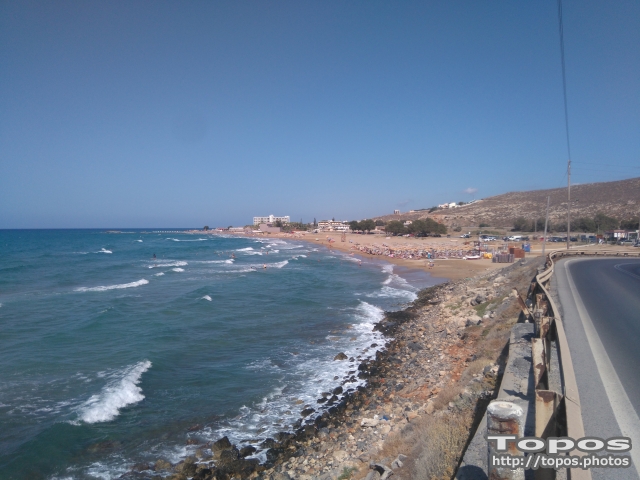

The promenade beach-front tourists can find sandy beach coves, the local taverna and hotel owners provide beach sunbeds and parasols and provide food and drinks service right on the breach. The beach is part of the Kokini Hani village area and is located next to the main road
Heraklion city - Agios Nikolaos and only 8km from the International Heraklion Airport.


On the east of Heraklion, right after the Vatianos valley, almost right on the highway to Agios Nikolaos, one can find the Niros Chani, or Kokkini Chani or Armylides, that belongs to the municipality of Gouves. Niros mansion is one of the best examples of Minoan architecture that can be easily visited after contacting the guard of the site.
An almost square building, extending over 1000m , the mansion was excavated by the archaeologist N. Ksanthoudidis.
The two storey building complex comprises about 40 rooms on the ground floor, corridors and two paved yards depicting all the features of Neo-Palatial villas. The main entrance is situated in the eastern yard, at the south side of which is a platform used for worship or for awarding the winners of races that might have occurred in the courtyard. There is a second entrance in the south courtyard.
The most important room is the so called room of figurines, or room of the benches, with low benches all along the south and eastern wall, with two doors (dithira) leading towards a corridor and possessed of an internal sky light opening.
Of great interest are also the rooms where 4 bronze axes, sacred Minoan symbols, and remains of ashes and coal were discovered. The excavator suggests that this room was probably a Minoan workshop of metal artefacts rather than a sanctuary. He concluded that this mansion housed a priest of the highest possible rank who had the power to manufacture and dispose holy objects of worship to the faithful.
Two climaxes in the south wing of the building complex in the north-western corner led to the second floor, while the storage rooms with wheat, oil and wine in clay containers (pitharia) were found in the north wing of the building.
The walls on the outside are built with porous stones while on the inside stones were used and unbaked clay. The horizontal and vertical wooden knots suggest that they might have had the technical knowledge of building earthquake resistant buildings.
The walls were strengthened by timber-frames and covered with a thick layer of plaster and marble slabs.


 Login with
Facebook
Login with
Facebook