







 Upload your photos for Gramvousa Castle and share them with us!
 Press here.


Prefecture: Chania
 Address:
Κίσσαμος, Ελλάδα
Address:
Κίσσαμος, Ελλάδα  Telephone:




Gramvousa Castle
Το κάστρο χτίστηκε πάνω σε απότομο ύψωμα τηε νησίδας Ήμερη Γραμβούσα, στην άκρη της ομώνυμης χερσονήσου, για να προστατέψει το μικρό φυσικό λιμάνι που υπάρχει στο χώρο, στα πλαίσια ενός ευρύτερου σχεδιασμού οχύρωσης της Κρήτης στα τέλη της Βενετοκρατίας.
Άρχισε να κτίζεται το 1584 πάνω σε σχέδια και υπό την επίβλεψη του Latino Orsini. Το σχήμα του φρουρίου είναι ακανόνιστο τρίπλευρο με τείχη και προμαχώνες από τις τρεις πλευρές, ενώ από τη βόρεια καλύπτεται από τα από το μα απροσπέλαστα βράχια.
Η προστατευόμενη πύλη είναι στην ανατολική πλευρά και οδηγεί μέσα από θολωτή στοά στο εσωτερικό του φρουρίου. Στον εκτεταμένο χώρο του βρίσκονται υπόγειες δεξαμενές που συγκέντρωναν τα νερά της βροχής, θεμέλια κτιρίων, ο ναός του Ευαγγελισμού και η πυριτιδαποθήκη, που μετατράπηκε στα χρόνια της Τουρκοκρατίας σε τζαμί.
Το φρούριο παραδόθηκε με προδοσία στους Τούρκους το 1692 και παρέμεινε στην κατοχή τους μέχρι τα χρόνια της επανάστασης του 1821, απότε καταλήφθηκε από επαναστάτες και χρησιμοποιήθηκε ως ασφαλές κέντρο θαλάσσιων επιδρομών, αλλά και πειρατίας. Ανακαταλήφθηκε από τους Τούρκους και παρέμεινε σε πλήρη ερείμωση μέχρι τα τελευταία χρόνια, που έρχισαν εργασίες αξιοποίησής του από το Υπουργείο Πολιτισμού.
Το φρούριο είναι κτισμένο πάμω σε ένα απότομο, επίπεδο ύψωμα με μοναδική πρόσβαση από την ανατολική πλευρά, όπου διαμορφώνεται ένα ελικοειδές μονοπάτι. Το σχήμα του είναι ελλειψοειδές και προσαρμόζεται στη διαμόρφωση του εδάφους με εναλλαγή ευθύγραμμων τμημάτων τείχους και μικρών προμαχώνων, στους οποίους οδηγούν κεκλιμένα λιθόστρωτα. Λόγω της απότομης διαμόρφωσης, το τείχος διακόπτεται στη βορειοανατολική πλευρά. Η κύρια είσοδος προστατεύεται από προ?.και από μια θολωτή στοά γίνεται η είσοδος στο εσωτερικό του φρουρίου, όπου οδηγεί ένα κεκλιμένο επίπεδο. Στο χώρο του φρουρίου σώζονται δυο μεγάλες, θολοσκέπαστες δεξαμενές, που συγκεντρώνουν τα νερά της βροχής από τα λιθόστρωτα. Από τα υπόλοιπα κτίσματα σώζονται ο ναός του Ευαγγελισμού και η πυριτιδαποθήκη, ενώ διακρίνονται τα θεμέλια των στρατώνων, του διοικητηρίου και των άλλων εγκαταστάσεων. Τα τείχη είναι κτισμένα από τοπικό ασβεστόλιθο, εκτός από το cordone, που είναι αποτελείται από λαξευτούς ψαμμίτες.
Places near Gramvousa Castle

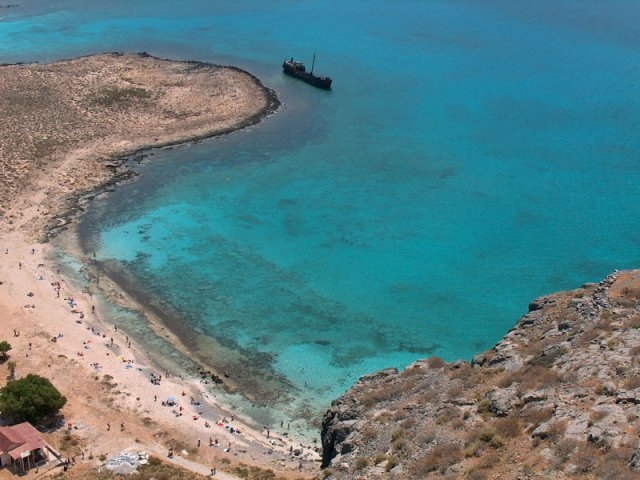
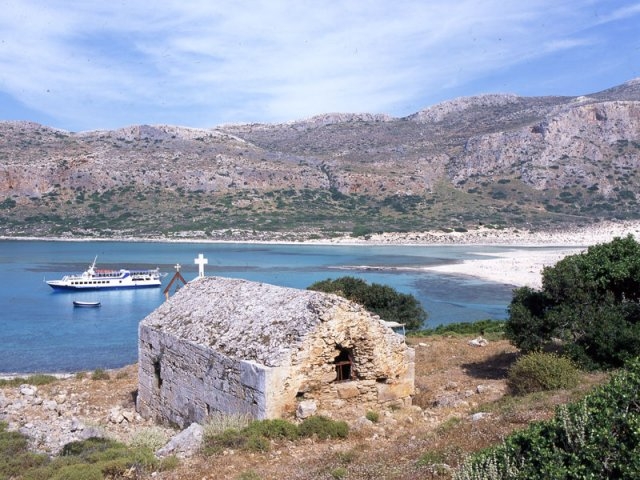


Balos Beach and Gramvousa area in Chania, west Crete: West of Kissamos and north of the beautiful village of Kaliviani, stretches the impressive Gramvoussa peninsula. The peninsula is formed by steep rocks and is covered with thyme and origanum bushes and wild flowers.
On the north west side of the peninsula opposite to the islands of Gramvoussa is the wonderful beach of Balos. The beach is covered with fine white sand and is located between the two creeks of the Tigani cape. The same white sand covers the bottom of the sea and grants to the sea an emerald color. In front of the beach is the picturesque island of Gramvoussa and on the back is the Geroskinos mountain (altitude 762 m).
The road from Kaliviani is well paved dirt road, with amazing view to the steep rocky seaside of the east side of the peninsula. The road ends one-two km before the beach, and the visitor can follow a pave road to Balos.
The two islands Gramvousa – once the haunt of pirates – today you can find the ruin of a Venetian fortress. Due to its strategic location, Gramvousa was fortified by the Venetians, who built a well-fortified castle on the top of a steepy rock at an altitude of 137 m. Construction on the castle of Gramvousa started in 1579 and ended in 1582. It was destroyed in 1588, however, when thunder struck on the powder store.
The castle was rebuilt in 1630. It was one of the three castles to remain under Venetian dominion after the Turkish occupation of Crete (the other two were those of Sitia and Spinalonga. Even though the castle was impregnable, during the Venetian-Turkish war the Italian commandant was bribed by the Turks and he gave over the castle in 1692.
Balos Beach and Gramvousa area in Chania, west Crete Balos Beach and Gramvousa area in Chania, west Crete Balos Beach and Gramvousa area in Chania, west Crete
During the Greek uprising against the Turks, Gramvousa played an important and desicive role. After many attempts the castle was finally occupied by the Cretan revolutioners in 1825, when a team of Cretans disguised as Turks entered the castle. Gramvousa was the first part of Crete to be liberated by the Turks.
The rocky island became a shelter for over 3000 people, and a base of operations for the revolution teams. But it also became a base of pirates that plundered every ship that passed to the seas around the island, so with the agreement of the Greek Government a English-French garrison took over the island of Gramvoussa in 1828. Today, the high walls of the Gramvoussa are preserved, half ruined but awesome.


 Login with
Facebook
Login with
Facebook