



 Upload your photos for Analipsi and share them with us!
 Press here.


 Address:
Ανώγεια, Ελλάδα
Address:
Ανώγεια, Ελλάδα  Telephone:




Places near Analipsi

Zominthos (Greek: Ζώμινθος, alternative spellings Ζόμινθος or Ζόμιθος) is a small plateau in the northern foothills of Mount Ida (Psiloritis), οn the island of Crete. Zominthos is roughly 7.5 kilometers west of the village of Anogia, on the path from Knossos to Idaion Andron, the great sanctuary cave near the peak of Ida. Zominthos is best known for the large Minoan building discovered there; signs of permanent settlement date back to about 1800 BC.
Professor Yannis Sakellarakis discovered the site in 1982, during his first day of excavations at the nearby Ideon Andron Cave by Psiloritis mountain, close to Anogia Village, when a shepherd told him about his pastures and sheep in an area called “Zominthos.”
Intrigued by the pre-Hellenic place-name, he began small-scale excavations the following year, which revealed the Central Building that is now believed to have dominated one of the main Minoan routes up to Mount Ida, today called Psiloritis. Zominthos may have been used as a rest stop for visitors making their way from Knossos to the Ideon Cave, the great sanctuary cave near the peak of Ida, as is mentioned in Plato’s Laws (book I, 625B): “I dare say that you will not be unwilling to give an account of your government and laws; on our way we can pass the time pleasantly in and about them, for I am told that the distance from Knossos to the cave and the temple of Zeus is considerable; and doubtless there are shady places under the lofty trees, which will protect us from this scorching sun.”
Zominthos seems to have been occupied beginning the 17th century B.C., with an extensive settlement and a monumental Central Building that covers an area of 1,600 square meters (17,000 square feet). Beneath the Central Building, which was gradually developed from the 17th century onward, the remains of several earlier structures have been identified. Because of the severe climate conditions on the mountaintop—including snow during the winter months—the site may not have been used throughout the entire year, but rather as a seasonal habitat. During the summer months, people likely moved their flocks of sheep here, to higher altitudes, while exploiting natural resources, such as minerals, herbs, and pharmaceutical plants. These products, along with woolen textiles and olives, were the goods most commonly exported from Minoan Crete to Egypt and the Middle East.
The Central Building is extremely well preserved and some of its walls still stand at a height of 2.2 meters (7.2 feet). However, creating the foundation of such a huge building at this altitude is quite a complicated issue. Its unlikely location and size, as well as its careful construction, indicate the existence of a central authority that intended to control the region’s resources, including its flocks and pastures. Zominthos may therefore be considered a well-organized administrative complex—built on a strategic spot for the control of the area—that fully adapted to the inhospitable Cretan mountains. Its location on the ancient route to Psiloritis and the wealth of pottery found at the site indicate that it was likely also a religious and crafts center.
The accounting archives in the Linear B script from the palace at Knossos—about 40 kilometers (25 miles) from Zominthos—record thousands of sheep along with shepherds’ names. However, the location of the land where these sheep were grazing has always been a mystery. Zominthos and the neighboring regions have very prosperous pastures, so it could be that the sheep recorded in the Knossos tablets were mainly concentrated here at Zominthos. The Central Building’s importance is confirmed by its asymmetrical facades and orientation to the cardinal points, which are well-known characteristics of Minoan palaces. Zominthos was destroyed by an earthquake around 1600 B.C., which resulted in a fire that devastated the vast majority of building’s structure. But various finds from the Central Building indicate that the site continued to be used in Mycenaean, Archaic, Hellenistic, and Roman times.
After a gap of 17 years, archaeological work at the site of Zominthos resumed in the summer of 2005. Although only the ground floor is visible today, archaeological evidence suggests that the Central Building had at least two floors built of large blocks of local stone, some coated with white plaster and decorated with frescoes. Only 10 of at least 45 rooms of the ground floor have been partly or fully explored up to now, and the results can be summarized as follows: The rooms contained pottery, masses of animal bones, numerous fragments of carbonized wood, and several small artifacts. The vast majority of the pottery includes conical cups, cooking pots, and pithoi. Also, several ceramic water conduits have been found, probably indicating a central drainage system. In the western part of the Central Building, a complex consisting of at least two workshops was discovered.




The most important among the potholes-caves of the Anogia - Petradolakia area (close to Nida Plateau), and one of the most important of Greece, is Tafkoura. It is the second deepest cave in Greece and one of the deepest in the Balkans, reaching -860 meters below the surface.
It was formed within the platy marble of the Psiloritis area, probably having started on one of the many faults that fragment the rocks of the area. However, water followed the upward movements of Psiloritis, digging the rocks deeper and deeper to reach sea-level, finally forming this long pothole-cave system. The total, mapped length of the cave is about 6,5 kilometers and it is the longest of Crete. Tafkoura, together with the nearby caves Tafkos (-475 m.), Diplotafki (-400 m) and Mythia Kampathoura (-270 m.) caves form the deepest karstic .water conduits of Psiloritis, though which rain and the snow water goes to the Almyros spring near Heraklion.
Life adapted in these underground worlds giving rise to species that can survive in the ageless darkness as easily as their ancestors did on the surface. Apart from the different species of bats; snails, spiders, false-scorpions, woolise and insects are the main groups which constitute the fauna of Psiloritis’ caves.
The caves however are closely related with the people of the mountains and their diachronic activities. From their first appearance on the island the caves were their places of worship, the houses, the cheese-dairies, refuges during difficult periods and also sacred places. That’s why most caves have a significant archaeological and historic value (and like all the caves in Greece are regarded as potential archaeological sites).


migeros plateau develops just below Psiloritis summit at an altitude of about 1700m. It is formed by a series of small and large depressions which are created along a big fault that fragments all the nortern area of Psiloritis Mountains.
A trail starts from Migero's plataeu leading up to the summit of Psiloritis oferring also a spectacular view of the dolines and the horizontal layers of rocks.


The Varsamonerou Monastery lies in the surrounding fields of the village Voriza, 54.5 kms from Heraklion City. The monastery is abandoned and, though its cells have been destroyed, its church has some of the most remarkable wall paintings in Crete. These paintings show the high artistic level of the different schools in 15th century Crete.Nowadays the church is known as Agios (Saint) Fanourios but it is also dedicated to Our Lady of the Way and to Saint John: through the years, several extensions were added to the original nave.
The oldest section of the church, dedicated to Our Lady of the Way, has wall paintings that date back to the 14th century. This north nave contains, among others, the outstanding representations of Saint John from Damas, Saint Onoufrios and the Dormition; in the south -and more recent nave- dedicated to Saint John the Forerunner, one can admire several scenes from the Passion (The Entrance to Jerusalem, the Last Supper, the Treason of Judas), the Crucifixion and the Epitaph.
The arch and eastern section of the church are from the 15th century (1400-1407).
All these wall paintings form an important part of the Cretan heritage during the first centuries of Venetian rule. In the Varsamonerou Monastery there were other remarkable icons, painted by the famous artist Angelos, and the beautifully carved iconostasis of the monastery is now in the Historical Museum of Crete, in Heraklion. This iconostasis is an outstanding example of religious art.The monastery, famous for all the art representations it possessed, was also known for its studies: a great number of books were to be found in its library. Not only religious books but ancient Greek texts as well: a catalogue, dating back to 1644, gives us the names of several philosophical treaties by such writers as Xenophon, Eschynis, Plutarch, etc.The monastery was abandoned at the beginning of the 18th century.

This is a very large cave located under the summit of Mavri (1,950m). It is reached after a steep and difficult ascent taking 4 hours on a path that is not well marked. A great part of the route is through a wooded area with three or four springs of water and rewarding views of the Messara plains and Libyan Sea.
If the weather is good then you may see the island of Gavdos far out to sea. The distance from Heraklion city is 56 km and from Zaros village 13km to east.

Also this village suffered during WW II. The view to the bay of Messara is fantastic and it seems like time has stood still in this village. A beautiful walking route leads to Lagolio village (4 km southern). The traditional mill: “Moulali” from 1850 is also worth seeing. Opposite of Grigoria is the beautiful mountain “Kartalos” which will be very interesting for climbers. At the 14th of September there is a party in Grigoria with Cretan music..


The plateau is 1400 meters from sea level and has a place in Greek mythology.
The plateau is 60 km south west from Iraklion, stop or stay at the notorious mountain village of Anogia to get the flavour of these wild mountains. 24 km higher up in the mountains from Anogia and totally unpopulated, the Nida Plateau is a high grazing ground for sheep in spring. At many times of the year it is cut off; completely snow-bound.
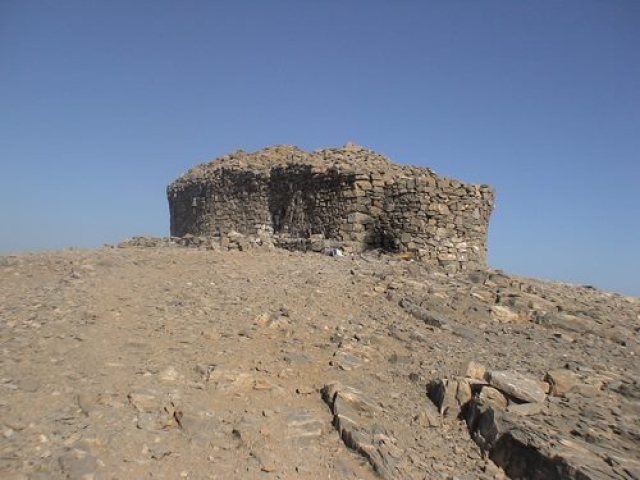
On the Nida Plateau, which is used for pasturing during the summer months, you will find the famous "mitata", vaulted stone buildings, in which the shepherds live.
Furthermore the Nida Plateau provides skiing facilities during the winter months.
Large parts of the murals from that era are also preserved. It is probable that it was a convent that was deserted after a natural disaster. On the eastern slope of the mountain, around 500 m from Agios Nikolaos one can find the small cave of Aghios Efthimios.In the Venetian years it was glebe of the Varsamonero monastery and was called Aghios Nikolaos in Karopouliana. The 1644 census indicates that it was a herding area.The glebe was preserved throughout the Ottoman period, while in the end of the 19th century a group of nuns settled in Agios Nikolaos. Many of the cells were renovated and the surrounding land, which was substantially large, started being cultivate.

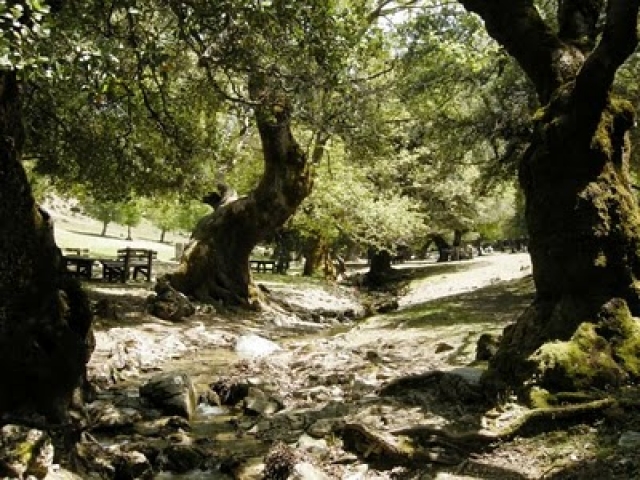
Lohria which is the last village at the east part of Rethymnon is located 61 km far from Rethimno city and 21 from Zaros (eastern) by an altitude of 580m. Residends: 1940: 329 and 1991: 294
After Vistagi continue to the south (toward Fourfouras) and prepare yourself for one of the most beautiful routes on asphalt in all of Crete, which takes you to the town of Agia Varvara through Lochria - Kamares - Zaros on the road that connects Iraklio and Gortina.
Although it cannot exactly be described as a “mountain route,” it follows the west and south side of Mount Psiloritis and sometimes takes you to a pretty high altitude from where you can enjoy a great view wherever you look. If the night finds you travelling in this area, you have very few chances of finding “decent” accommodations. Apart from some shabby Rooms to Let in Platanos, Kamares and a few other villages, there is no place to rent.


 Login with
Facebook
Login with
Facebook