




 Upload your photos for Sitia Geo Park and share them with us!
 Press here.


Prefecture: Lassithi
 Address:
Sitia, Crete
Address:
Sitia, Crete  Telephone:




Sitia Geo Park
Το Πάρκο βρίσκεται στο Ανατολικό τμήμα της Κρήτης. Περιλαμβάνει την ευρύτερη περιοχή της Σητείας και ολόκληρες τις περιοχές της Ίτανου και της Λεύκης, καθώς και όλες τις παράκτιες περιοχές από Βορρά προς Νότο. Εντός του Πάρκου υπάρχουν, μεταξύ άλλων, οι γνωστές περιοχές Ζάκρου, Παλαίκαστρου, Ζήρου, Ξερόκαμπου, Σίτανου και Καρυδίου.
Τα όρια του Πάρκου έχουν χαραχθεί με σαφήνεια και αγκαλιάζουν μία μεγάλη έκταση συνολικού εμβαδού 361,4 106 τ.μ. (ή 361,4 εκτάρια).
Το Πάρκο χαρακτηρίζεται από μία ευρεία ποικιλία στοιχείων του αβιοτικού και βιοτικού περιβάλλοντος και αποτελεί έναν μοναδικό γεωτουριστικό προορισμό.
Το Φυσικό Πάρκο Σητείας χαρακτηρίζεται από πολύ πλούσια γεωκληρονομιά η οποία περιλαμβάνει εντυπωσιακά πετρώματα από τις βασικότερες αλπικές τεκτονικές ενότητες, ιδιαίτερους σχηματισμούς και γεωμορφές στις μεταλπικές ενότητες, χαρακτηριστικές τεκτονικές και μικροτεκτονικές δομές, καθώς και πλούτο απολιθωμάτων.
Το Φυσικό Πάρκο Σητείας προσφέρεται για πολυάριθμες δραστηριότητες που καλύπτουν ένα ευρύτατο φάσμα προτιμήσεων, από εκείνους που απλώς επιθυμούν να ξεκουραστούν σε ένα παραδοσιακό και μοναδικό μέρος της Κρήτης μέχρι και τους πιο απαιτητικούς που αποζητούν την περιπέτεια.
Places near Sitia Geo Park


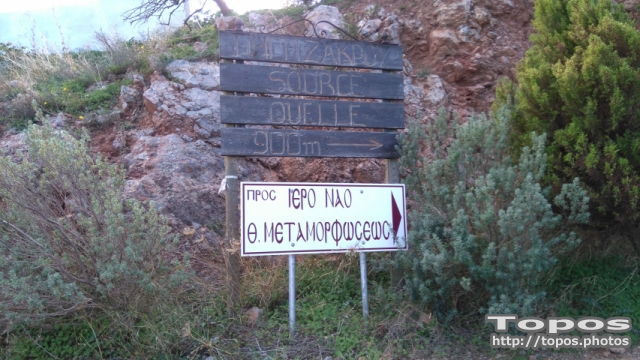
The Epano Zakros spring has been formed due to the contact between two water permeable Tripolitsa limestone formations, which are thrust on the non permeable metamorphic rocks of the Phyllite-Quartzite unit. The water moves through the caves of Zakro’s mountains until it reaches its exit at the spring. The water from the spring irrigates the entire surrounding region, while it preserved important ecosystems that even reach Kato Zakros. In the past, it supported several watermills, some of which are preserved to this day.

The second gorge of Epano Zakros is located to the north of the first one and is also an impressive geotope. The gorge can be seen from the country road going from Karydi to Adravasti.

It includes natural sculptures chiseled by the weather and erosion in the Tripolitsa limestone rock formations, and which can be found on the footpath leading from Epano Zakros to Skalia. These processes create strange rock forms that look like statues, and with a little imagination one can make out familiar silhouettes from the animal kingdom!
http://www.sitia-geopark.gr/
The first gorge of Epano Zakros starts from the dirt road exactly above the spring of Epano Zakros. The gorge is very impressive, especially after the dirt road where unique landforms have developed in its walls.

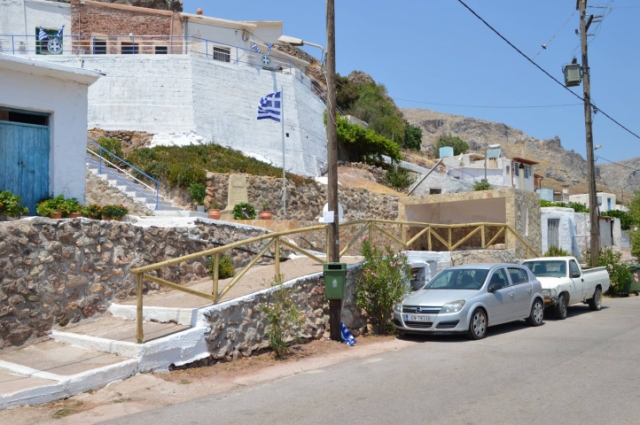

This village belongs to the Itanos Municipality. The origin of the name is unknown, perhaps it is derived from a family name. It is not mentioned in the 1583 census, but it is believed to have been razed with other villages during Turkish pirate raids in 1471 AD and later reestablished after the 16th century.
Το the west of the settlement is the hill of Endichtis (560m) which was believed to have been the site of a peak sanctuary. Excavations in 1972 however proved that this could not have been so. Various things such as loom weights, a whetstone and clay spindle whorls were collected, but not one single figurine, which seems to exclude the possibility of this spot having been a shrine. So it must be regarded rather as a simple habitation.
Adravasti is 36 km from Sitia, 2 km from Zakros and 16 from Palekastro.From the book "Sitia", N. Papadakis, Archaeologist, 1983

The plateau of Mavros Kambos can be found between Epano Zakros and the area of Skalia, crossing the E4 European long distance path. It is a beautiful plateau which is home to several small wetlands.
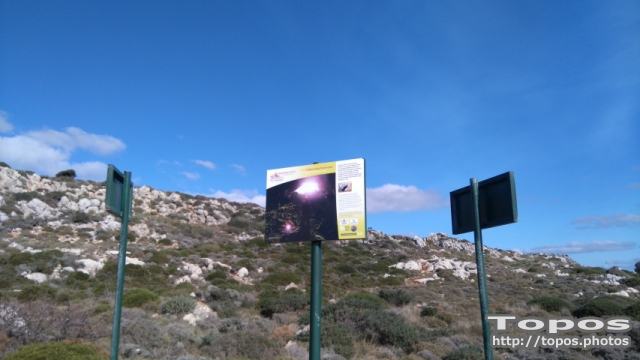

Maza gorge starts in Karydi and ends just outside Adravasti. It is long with impressive landforms in its interior, however the trail is only for experienced canyoners. In the past it was the main road connecting various hamlets.


 Login with
Facebook
Login with
Facebook