



 Upload your photos for Agios Georgios and share them with us!
 Press here.


 Address:
Μυλοπόταμος
Address:
Μυλοπόταμος  Telephone:




Places near Agios Georgios
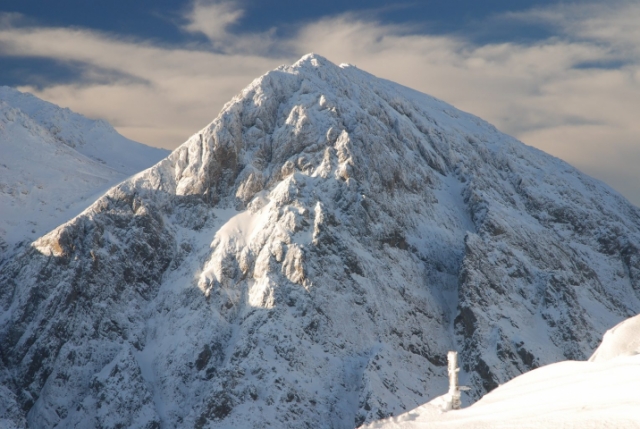

Mount Psiloritis is a Historical place. It has a rare ecology. It has a particularly interesting geological formation. It is an area of outstanding natural beauty. It is an historical place of great cultural value and weight. It is a symbol, the symbol of Crete, of manliness, of freedom.
It is both a settled area and a place of productivity where thousands of people live and work and a place of culture and entertainment, which attracts thousands of visitors each year.The mountain range of Psiloritis is situated in the center of Crete and includes the highest peak of the island, Timios Stavros, with a height of 2,456 m. It covers the largest part of the Prefecture of Rethymno and the western part of the Prefecture of Heraklio.Psiloritis, also called Mount Idi, (the name is derived from the Doric “ida” =trees for felling, woods, forest, wooded mountain) is one of the most impressive and beautiful mountain ranges on Crete with profuse geomorphologic, ecological and folklore characteristic. Furthermore it stands as a symbol of Crete and is the source of continuous inspiration.The reasons why the Cretan people have been so aware of the importance of this mountain range since Minoa times can be found in its rich natural beauty, the magnificence and harshness of its peaks and in the way it towers over and dominates the landscape when viewed by the spectator from almost every point of the island.
Psiloritis Mountain in Heraklion Prefecture Psiloritis mountain - The peak
The fact that Psiloritis was the most important place of worship during Minoa times should not be considered as purely accidental. It was probably the only place where Zeus, the king of gods of ancient Greece was definitely worshipped. According to tradition Zeus’ mother helped him to escape and to hide in a cave on the Ida Mountain (Nidas), until he became a man, thus rescuing him from the wrath of his father Kronos. Small paths, many of which have been preserved up until today, led from various Minoan palaces to the Ideon Antron, where people arrived after having passed through plateaux and gorges in the mountain in order to make sacrificial offerings and to worship Zeus. During the period of Crete’s occupation the precipitous rocks and ravines served as hiding places and shelter for the partisans. Today, the visitor is still fascinated by the beauty of Mount Psiloritis. Here, the traditions and skills of shepherds and cheese- makers, manifested in the characteristic “mitata”, have been preserved since Minoan times. A rich tradition of folklore and culture flourishes in the beautiful villages, which surround the mountain, through which the genuine and unaltered art, the wisdom and the civilization of the earlier inhabitants of Crete are continued.
Sources Text: www.psiloritis-natural-park.gr

Monastiraki is the archaeological site of an ancient Minoan town close to Monastiraki village on the island of Crete. The site is on the plain of Amari, west of the Ida massif. Monastiraki is 38 kilometers from Rethymnon.
Monastiraki was first excavated during World War II by the German Archaeological Institute. Excavations began again in 1980 by the University of Crete. Three areas have now been excavated. In the early 1980s an Italian team excavated a small area at the north end of the site where the first store of seals was found. Nearby is the area that was illegally excavated by the Germans during the Second World War.
Their excavation was based on the notebooks of the noted British archaeologist J.D.S. Pendlebury, who was captured and executed by the Germans after the Battle of Crete. The Germans concluded that Monastiraki was a small site and their excavations were not extensive. Greek archaeologists have recently revisited the German excavations with some interesting results.
The main part of the excavation lies to the south of these two areas and is under the supervision of Greek archaeologist Athanasia Kanda. There is not very much published in the public domain, and photography is still forbidden at the site, a ruling enforced by the local villagers who allow visitors onto the site.
Monastiraki likely dates to the Middle Minoan Old Palace period and was destroyed at the same time as the old palaces. Its importance for archaeology, then, lies in the fact that it was not subsequently built on and remains one of the best examples of Middle Minoan archaeology on the island. It is clearly located on a strategically important site, dominating the Amari Valley which connects the south coast of Crete to the west of Phaistos with the north coast of Crete at present day Rethymno. It is quite likely that Monastiraki was developed by Phaistos inhabitants founding a satellite center. (Hogan, 2007)
The site may have been a palace, and has thus far yielded a complex of buildings, including storehouses, two archive rooms of earthenware stamps and sanctuaries.


Vistagi is a mountain village (alt 500m) at the eastern side of the Amari valley 39 km far away from Rethymno City. In the past known as Pistagi or Bistagi or Bistaghi . It is mentioned in a document from 1577. Vistagi, one of the most beautiful villages on the island, built on a mountain and spread along the two sides of the road. The village is not on the classic tourist routes, so it has very few tourists and no infrastructure to accommodate them.
It is large and peaceful and very pleasing to walk through. Most of its houses have been whitewashed but some are painted in earth colours and especially ochre. The Amari valley and the snow-capped Psiloritis peaks all around complete the scenery that you can enjoy from here.

Many species of birds nest in the gorge, such as harrier eagles, vultures, wild pigeons and crows. Visitors will also come across abandoned olive groves, as well as a wide variety of indigenous and other plants of Crete, e.g. jerusalem sage (Phlomis fruticosa), campanula (Campanula tubulosa), kermes oaks, maples, and pines.
The trail leads to the cave of Pan, which was named thus, as according to the myth, this is the birthplace of the ancient God Pan. In the cave’s interior one can see decorations on the walls that may date back to the Minoan period and imply that this was a place of worship.
Platania Gorge is a unique trail, with impressive cliffs, vertical limestone rocks, rock roofs and caves. It is recommended for experienced mountaineers, although the first part of the trek is quite easy, even for children who are physically fit.Many species of birds nest in the gorge, such as harrier eagles, vultures, wild pigeons and crows. Visitors will also come across abandoned olive groves, as well as a wide variety of indigenous and other plants of Crete, e.g. jerusalem sage (Phlomis fruticosa), campanula (Campanula tubulosa), kermes oaks, maples, and pines.
The trail leads to the cave of Pan, which was named thus, as according to the myth, this is the birthplace of the ancient God Pan. In the cave’s interior one can see decorations on the walls that may date back to the Minoan period and imply that this was a place of worship.


 Login with
Facebook
Login with
Facebook