




 Upload your photos for Statue and share them with us!
 Press here.


 Address:
Ηράκλειο
Address:
Ηράκλειο  Telephone:




Places near Statue



Study and Management of the Natural Environment of Crete Public awareness, education and sensitisation of local people as well as the visitors of the area Link University activities with Cretan society Set up a network of Ecological Museums in Greece and throughout the Eastern Mediterranean
Eastern Mediterranean is unique at a global level due to the great ecological and cultural complexity. The evenness as well as the contrast, the stability, many affinities and the special features characterizes the area.The aim of the Natural History Museum of Crete is the study, protection and promotion of the special features of the area of Eastern Mediterranean.The foundation and the development of NHMC were favoured by the following conditions:
The potential of the University of Crete and its ability to promote modern technologies in the field of environment The geographical position of Crete, lying it the center of Eastern Mediterranean and the southernmost part of the European Union The warm acceptance and support of the local society
Structure and OrganizationOn the basis of the presidential law for its establishment and the university rules, NHMC:
Runs in the context of the Faculty of Science of the University of Crete Consists of five departments: zoological, botanical, anthropological, and geological - mineralogical
The laboratories and collections of the Museum are located at the premises of the University of Crete.11th International congress on the Zoogeography, Ecology and Evolution of the Eastern Mediterranean(21- 25 September 2009, Irakleio, Crete, Greece)For the exhibition halls:Opening Times and AdmissionMonday to Friday: 09:00 to 16:00Weekend: 10:00 to 17:00Natural History Museum of CreteUniversity of CreteSofokli Venizelou Avenue (west of the port of Heraklion)Heraklion, Crete GreeceTel:+30 2810 282740




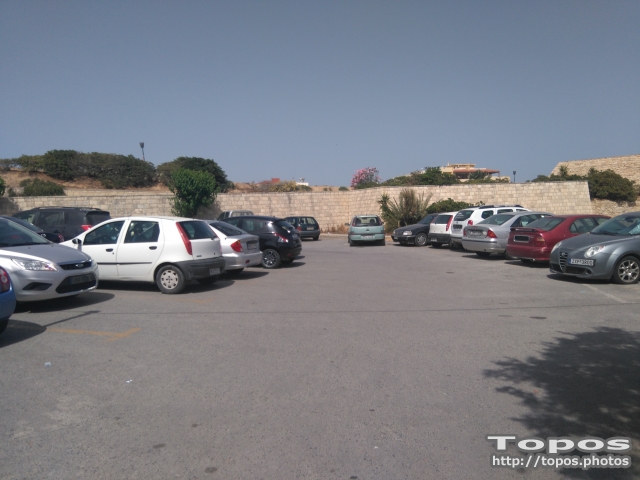


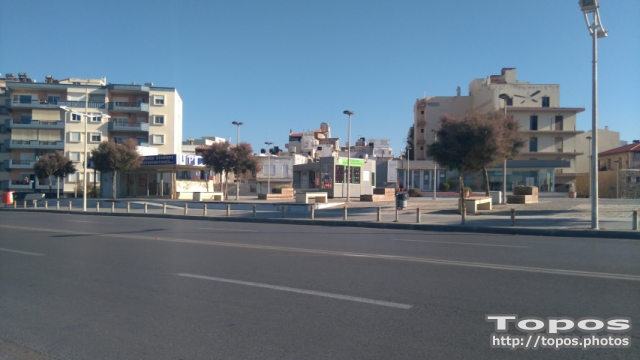

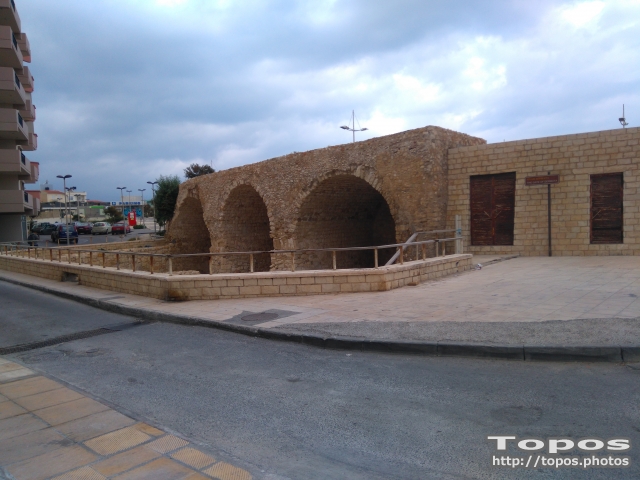
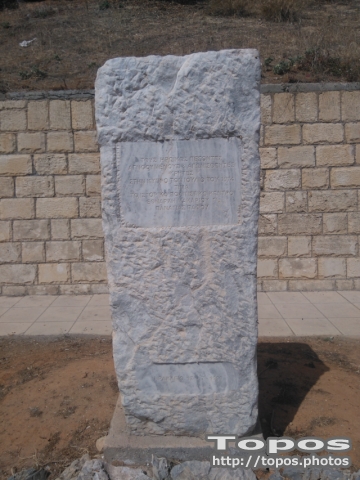
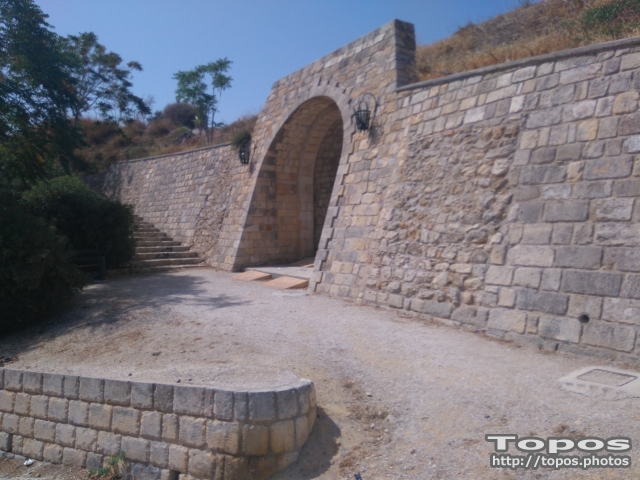


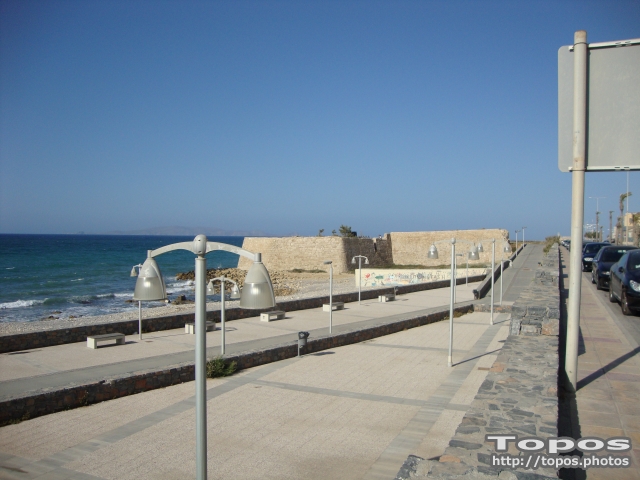



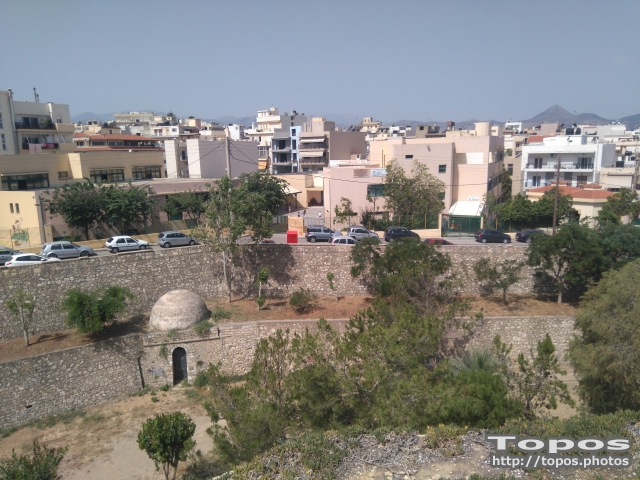
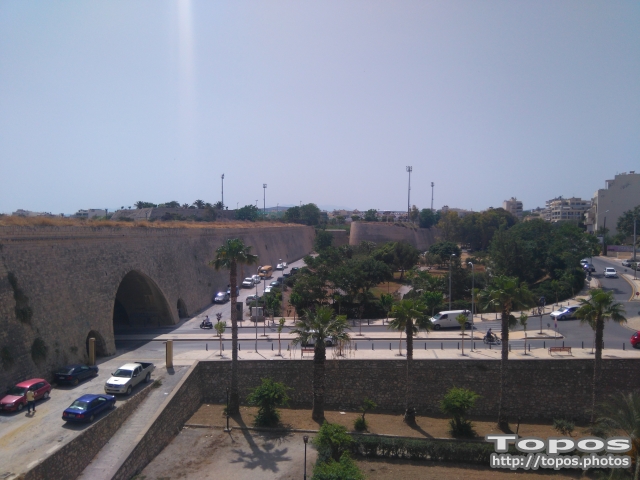
Admired as one of the most inspired and best-designed examples of fortification in the entire Mediterranean basin, the 16th and 17th century enceinte surrounding Venetian Candia has survived the ravages of time. Triangular in shape, with its base at the sea, the mighty enceinte has a perimeter of about 5.5 kilometres. The hallmark of the defensive layout are the bastions, linked by curtain walls decorated at many points by escutcheons and the lion of St. Mark, symbol of Venetian omnipotence. The gates in the enceinte, which served to link the town to the countryside, still stand as important architectural monuments.
To this day, the walls that withstood the Ottoman siege in the mid-17th century mark out the boundary of the old town.
Historical phases
The strategic position at which Chandax lay in the Mediterranean made it a frequent target of raids by those wishing to gain control of the wider area.The fortifications around the Arab "Fortress of the Ditch", Byzantine Kastro and Venetian Candia reflect both the identity of the conquering powers and developments in warfare and fortification technology. At each stage the defences had to cater for the demands of what was a rapidly expanding city.
Bastions
The bastion was the main feature of the new defensive design known as the bastion system or Fronte Bastionato. This was first implemented in the 16thcentury and completed in the 17th, to afford better protection from new firearms created after the invention of gunpowder. Bastions are large, solid constructions projecting from the main line of defence, designed to protect adjacent bastions, the curtain wall and the ditch.
Curtain walls
The bastions were linked by straight sections of wall known as curtains, made of thick earthworks inclined on the exterior to form the scarp, and revetted or faced with ashlar blocks. Sturdy foundations projecting beneath the base were required to support the massive superstructure.
Piazze basse
One of the distinctive features of the bastion was the piazza bassa (lit. "low square"), constructed in the bastion flank, at the point where the bastion abutted the curtain wall. Every landward bastion had two such piazze, built at an intermediate level between the ditch and the scarp. They were protected by the rounded sections at the ends of the bastion faces, which became known as oreillons on account of their resemblance to ear lobes.
Cavaliers
In order to improve surveillance of the area beyond the ditch (the glacis), the Venetians planned and constructed additional small-scale fortifications known as cavaliers. These were initially built on the curtain walls and later on or near the bastions.
Ditch
The ditch surrounding earthworks was designed to keep the enemy as far from the enceinte as possible, and thus formed an essential, integral part of any fortifications. Before the bastion system was employed, the ditch was filled with water to form a moat aimed at further inhibiting any attempt to get near the main fortifications, though that around Chandax was always dry.
Outworks
In order to fortify the weakest positions in the enceinte and keep the enemy even further from the ditch and the walls, the Venetians built twelve additional outworks to serve as heavy artillery emplacements.
Defenders reached the outworks by means of underground passages that ran from the ditch.
The only such defence still extant is the Fortress of St. Dimitrios, to the east of the enceinte opposite the Vitturi Bastion. All the other outworks have been demolished, though their trace survives in the outline of modern building blocks.
Escutcheons
The Venetian enceinte is studded with escutcheons, most of which are to be found above the gates, on bastion oreillons, curtain walls and on the Koules fortress. Often accompanied by dates or inscriptions, these emblems and coats of arms bear witness both to the presence of Venetian nobles and officials and to their involvement in various phases in the building of the fortifications. Yet what best illustrates Venetian dominion over the city is the winged Lion of St. Mark, symbol of the Serenissimi. Depicted in relief, this is encountered in a range of different versions.
Magazines
Magazines for the storage of gunpowder barrels were erected throughout the city. Built of stone, they were either round and domed or square with a pyramidal roof. Most of them were located near bastions, since they were directly related to military readiness and warfare.
Gates
A number of entrances built into the town enceinte enabled communication between fortified Candia and the outside world. Depending on their use, these were classified as city gates, i.e. those which served the movement of goods and people in addition to defence, and strictly military ones for the exclusive use of the town guard, such as the Bethlehem Gate. Regardless of their use, almost all of these gates were situated near bastions or other strong points in the fortifications, so as to be adequately protected in case of enemy assault.
Equipped with a special guard and large wooden doors that opened at dawn and closed at dusk, gates in the first category (the St. George, Jesus and Pantocrator Gates) linked the town to the outlying country. A significant role was also played by the so-called shore gates, which secured communication between the town and the port and sea: the Harbour Gate, the Arsenal Gate, the Dermatas Gate, the Sampionara Gate and the St. Andrew Gate (the last of which were adjacent to the bastions of the same name).
Most of these entrances remained in use in the Ottoman period, up until the early 20th entry. The arrival of the first cars on the island then rendered the old Venetian gates inadequate; new entrances capable of catering for modern transport needs were then created, usually at a short distance from them.


 Login with
Facebook
Login with
Facebook