



 Upload your photos for Ornias and share them with us!
 Press here.


 Address:
 Telephone:




Places near Ornias


Deep inside the valley of the river Sarantapihos is built the village Mythoi. It is 22 km away from Ierapetra, it is a small village, in a verdurous landscape, with a beautiful square under the shade of age-old planes. It is said that the village took its name from the plant “Minthi”, or mint, which is abundant there.
However, it may have been named thus because of its many legends, traditions, and myths (mythoi), the most prevalent one being the Sarantapihos’ one. A mythical giant, forty ells tall, like another Talos or Akritas Digenis, he protected the residents from raids. There are the place names “Tou Sarantapihou i Patounia” (Sarantapihos’ footprint) and “Tou Sarantapihou to Mnima” (Sarantapihos’ grave).
There is evidence of ancient inhabitation at the site “Leniko” where traces of walls can be seen. Also, in an excavation, the head of a woman of the Roman period has been found. At the sites Kastelou Haraki and Orfanou to Spiliari clay pots, oil lamps, e.t.c. have been found. The site called Sarakina above Mythoi was a fortress, a hideout of Saracen pirates. The village’s modern history is rich in contributions to the struggles against the conquerors. It nurtured the chieftains Emmanouil Xenikakis, Ioannis Hatzakis, Emmanouil Christakis and others. During the German Occupation, residents of Mythoi took part in the guerilla corpses of the United Resistance of Captain Bantouvas. In the battle of Symi, one of the most heroic figures was lost, Apostolos Vagionakis, who stood up to the enemy’s bullets for the ideals of our unsubdued Crete. They paid the price of their participation to the struggles during the German Occupation, as 4 persons were executed, including the old and bedridden Nikolaos Ioannou Christakis.
The community of Mythoi is today a Local Department of the Municipality of Ierapetra, in 1900 it had 360 Christian residents, in 1951 it had 423 and in 2001 it had 287. In the north of Mythoi, around 6 km away, there is the settlement Karydi with the famous Monastery of Panagia (Our Lady) Karydiani and now abandoned summer residences. The mountainous settlement “Minos”, which is situated in a verdurous small plateau below the Afentis peak of the Lasithi mountains, also belongs to the Community of Mythoi.
The village Mythoi is a lively village with a rich social and cultural life. It has a cultural association, a football team and field, and a modern olive press. The village’s square with its old plane trees, the mulberry trees, the old fountain, the traditional coffee-houses with the raki and the local dishes, is a place of reference for the residents of Mythoi. The sights, the wild natural landscapes in the north of the village, the famous gorge of Sarakina, a monument of natural beauty, attract a lot of local and foreign visitors. The gorge of Sarakina is on of the most beautiful in Crete. Its steep, vertical sides cause awe, and reach a height of up to 250 m. Its widest opening is no more than 15 m while in some places it’s so narrow that its sides seem joined. Its rich flora and fauna, dittany, the wild birds that nest there and the route inside the gorge are breath-taking.
Its promotion is a foremost goal of the Local Department and the Municipality of Ierapetra, of the residents of the village, who head to the future with optimism and anticipation for the development of their place.


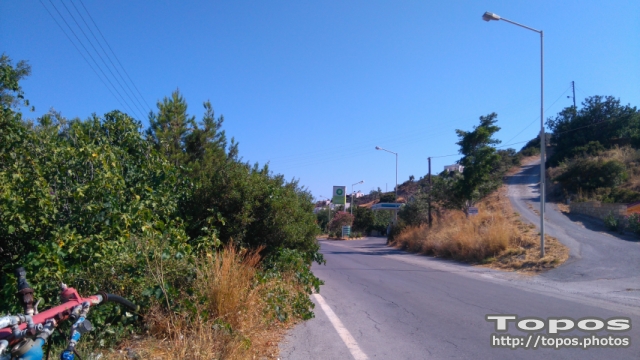




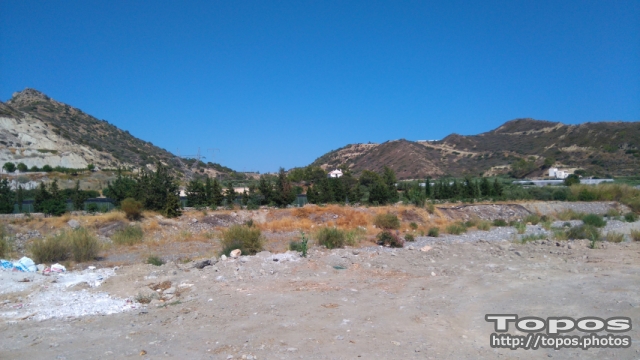

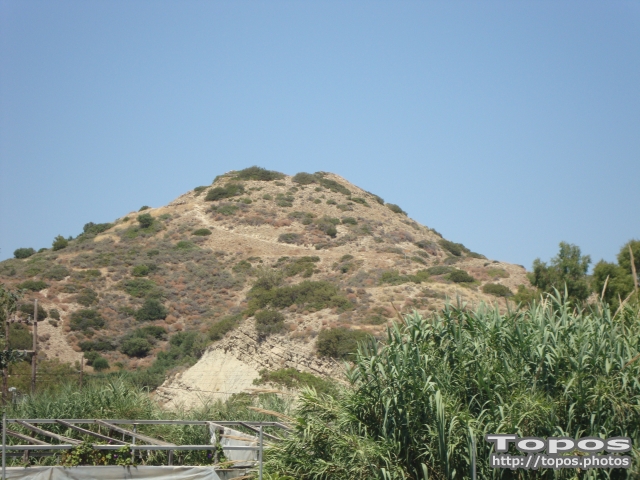

Pyrgos settlement is founded at the same period with the neighboring Fournou Koryfi (2600-2300 BC) but habitation was longer lasting as architectural had been dated up to the Late Minoan period (1600-1450 BC).
One of the most impressive buildings have been uncovered is the two floor Tafos-Ikia, which is built on the northwest edge of the village at the beginning of the Middle Minoan period (2100-1900 BC).
In the next period (1900-1700 BC) belongs a tower and a water tank while in the center of the fortified settlement, was probably where the seat of the local ruler was located. Late Minoan I period (1600-1450 BC) erected on a hilltop commanding Agrepavlis. The architecture is distinguished by its palatial features. It must have been the administrative center of the entire Myrtos plain.

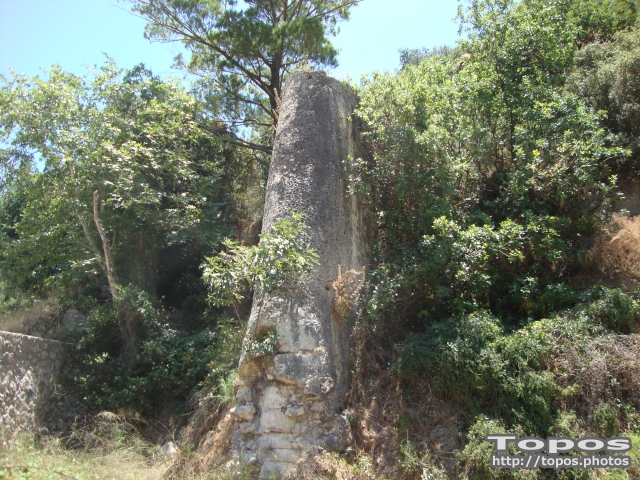


Myrtos is approximately 2 minutes away by car, and is a little treasure. In our opinion, this is a Greek Seaside Village rather than a resort. Here you will find all the shops & tavernas you will need during your stay.
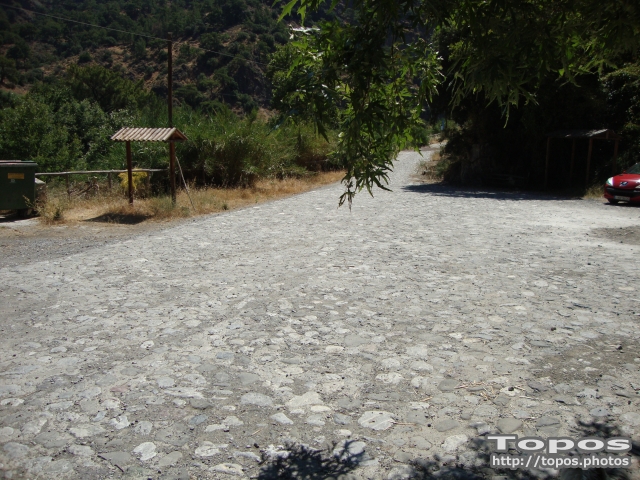

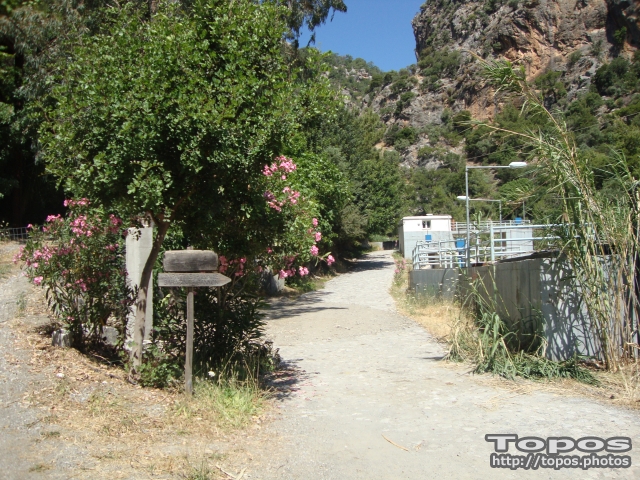

Sarakina is located a few meters outside and on the northern side from Mythoi Ierapetra’s village and in a small distance from the beach village Myrtos where the river flows. Its name comes from Saracen conquerors, place name that you can see in many places of Crete.
It is considered as one of the most beautiful walking gorges of Crete. Its length is only one kilometer long but in this small route each visitor can see a sculpture created by the water in millions of years that corrodes the rock in its path.
According to Greek Mythology, giant Sarantapihos who was son of Zeus, was thirsty and crouched in order to drink water from river Krygios or Myrtos. His long beard ripped the mount rock in half and that’s how Saracen gorge was created.

Fournou Koryfi settlement was established and destroyed by fire in the Early Minoan period (2600-2300 BC). It consists of 90 small region places arranged in dense device.
It’s a six residence minor location distinguished with small passages and hallways. It was ground floor built with loft and everyone had a workshop, storage rooms and galley.
The small sanctuary in the southwest edge of the village where famous Goddess of Myrtos was found, would serve the whole village. The systematic excavation of the site provided important data on the time economy.
Residents were cultivating cereals, olives and grapes, while they were rearing bred sheep, cattle and pigs. They also contained proper equipment in order to weave, build, clay pots and produce oil and wine in the settlement.

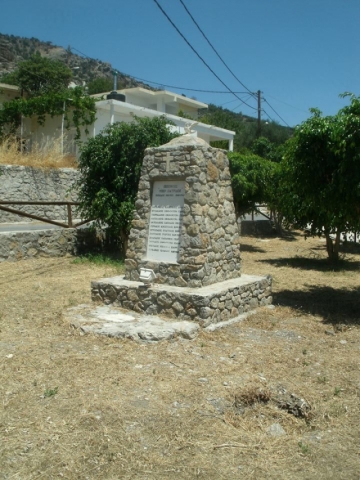

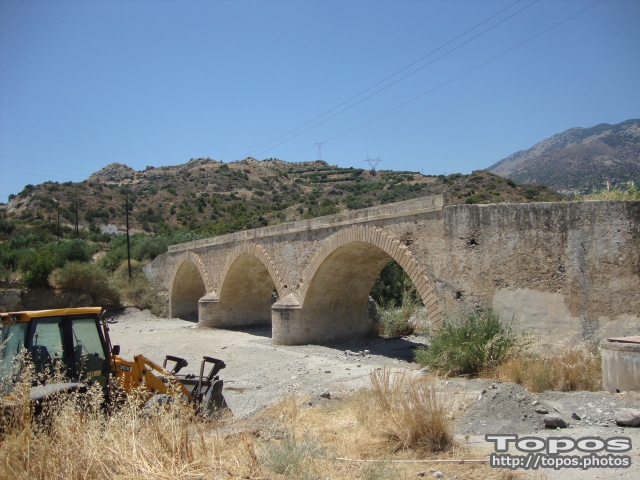

North of Myrtos in the road towards Mournies where Kryopotamos passes (on summertime it is a dry river) there is a bridge fitted with an inscription that says it was built in 1884. The bridge is made of stone and it consists of three big bows that were made from hewn rectangular stones that extrude in corners.
The two middle “legs” are reinforced by little struts that on the northern side have a triangular shape and the southern side is roundabout. In its upper surface – in the passable level – the old cobbled road can be seen in many spots, while the created parapet in its sides is very low.
The whole structure of the bridge does not only prove the remarkable aesthetic perception of manufacturers but also the perfect knowledge of the technical bridge construction with materials that had at this time. The bridge has been described as a work of art.

This was once a small monastic complex which supervised the neighboring monasteries of Jesus Christ the Saviour, and Virgin Mary ‘Panagia Vagionea’. The monastery of Karkasa (or Karkasia) is well-known from archival sources of the 15th century and must have included all these three small monasteries. In the late 14th century, the scholar monk Nilos Damilas lived in the monastery. He was known for his action against the pro-Western theologians of the era and left important writings.
Only ruins survive from the cells of the original monastery. The catholicon is a single-nave barrel-vaulted church of 10.00 x 5.40 m, with two transverse reinforcing arches. The church is adorned on all its internal surfaces with frescoes, which constitute a comprehensive iconographic whole, including a total of 31 scenes.
Apart from the wider Christological cycle on the northern wall (22 out of its 26 scenes survive), above the zone of saints depicted in full body, we can see a cycle of the martyrdom of the Apostles, to whom the church is dedicated. The preservation of the iconographic decoration is unsatisfactory, however, on the basis of a 1429 incision, it has been dated to the 15th century (Maderakis 1988, 59). Two important icons which were in its altar-screen with distinct elements of Constantinople-styled art dated to around 1400 are nowadays kept at the Church of All Saints in the village of Anatoli.
The monastery itself is currently inactive and belongs to the parish of Anatoli.


 Login with
Facebook
Login with
Facebook