



 Upload your photos for Atzikiari and share them with us!
 Press here.


 Address:
 Telephone:




Places near Atzikiari


Itanos beaches are located 2 km north from Palm beach Vai, 8 from Palekastro and 26 from Sitia. The sandy beach of the ancient town of Itanos or Erimoupolis, Lassithi prefecture.
If you’re looking to kick back and relax and do nothing more serious than soak up the sun or occasionally dip your toe into crystal clear waters, then the beaches at Erimoupolis or Itanos in Lassithi Prefecture could be the place for you. Reached by walking a short distance from the small car park at the ancient site of Itanos it’s some distance to any facilities so it is essential to bring plentiful supplies of water. The beaches are quiet on weekdays but are popular at weekends so can become busy. The clear water and sandy beach are perfect for a lazy day with some palm trees offering much needed shade in the heat of the day.
Area description:
There is another longer sandy beach that you can get to - on foot - over the low hill to your left, where the main road stops.
In fact, there are 3 beaches here: the first is the one at the end of the road, the second is reached walking to the north (the beach on the 1st photo) and the third is also reached walking south behind the small fortress. The third one is also suitable to spend time under the shade of the palm-trees.
However the best selection for swimming is the northern, sandy beach. The bottom of the sea is rich. There is a whole ancient city down there giving home to a variety of fish. It is a paradise for the lovers of diving.
These are amazing beaches in Crete, secluded with perfect water. During the week it is sparsely populated but come the weekends it becomes crowded especially during July and August.There are no amenities at the beach and the closest restaurant is a 10minute drive (Palm Beach Vai), so take your own water etc. Parking can be found near the ancient site of Itanos.
What to do..
The site of Ancient Itanos is well worth a visit, particularly as it was once the most important settlement on Crete. Visitors to the site today can see ruins including a black stone tower, and Early Christian churches. Keen snorkelers will be pleased to hear that some of the site is under water, making the views through the crystal clear water even more rewarding. The town of Sitia nearby is off the well-worn tourist track in Crete so has retained much of its charm and relaxed atmosphere. With a busy harbour, a good variety of shops, a pretty seafront and a large sandy beach of its own, it’s a good base for exploring unspoilt Crete at its best.
Above the beach of Erimoupolis one can observe the red marbles that are unique to the area and which belong to the Phyllite-Quartzite unit. The rock formations can be seen from the road leading to Kyriamidis Bay.


If you’re looking to kick back and relax and do nothing more serious than soak up the sun or occasionally dip your toe into crystal clear waters, then the beaches at Erimoupolis or Itanos in Lassithi Prefecture could be the place for you. Reached by walking a short distance from the small car park at the ancient site of Itanos it’s some distance to any facilities so it is essential to bring plentiful supplies of water. The beaches are quiet on weekdays but are popular at weekends so can become busy. The clear water and sandy beach are perfect for a lazy day with some palm trees offering much needed shade in the heat of the day.
Area description:
There is another longer sandy beach that you can get to - on foot - over the low hill to your left, where the main road stops.
In fact, there are 3 beaches here: the first is the one at the end of the road, the second is reached walking to the north (the beach on the 1st photo) and the third is also reached walking south behind the small fortress. The third one is also suitable to spend time under the shade of the palm-trees.
However the best selection for swimming is the northern, sandy beach. The bottom of the sea is rich. There is a whole ancient city down there giving home to a variety of fish. It is a paradise for the lovers of diving.
These are amazing beaches in Crete, secluded with perfect water. During the week it is sparsely populated but come the weekends it becomes crowded especially during July and August.There are no amenities at the beach and the closest restaurant is a 10minute drive (Palm Beach Vai), so take your own water etc. Parking can be found near the ancient site of Itanos.
What to do..
The site of Ancient Itanos is well worth a visit, particularly as it was once the most important settlement on Crete. Visitors to the site today can see ruins including a black stone tower, and Early Christian churches. Keen snorkelers will be pleased to hear that some of the site is under water, making the views through the crystal clear water even more rewarding. The town of Sitia nearby is off the well-worn tourist track in Crete so has retained much of its charm and relaxed atmosphere. With a busy harbour, a good variety of shops, a pretty seafront and a large sandy beach of its own, it’s a good base for exploring unspoilt Crete at its best.
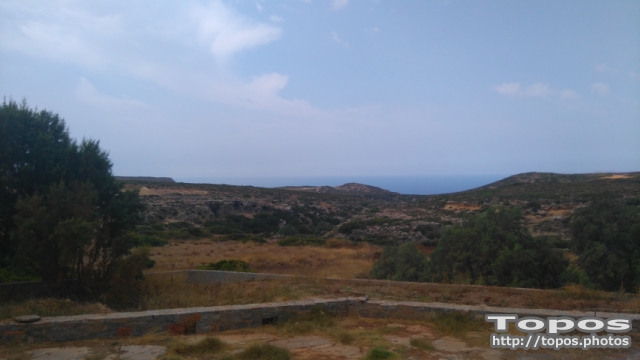


Itanos beaches are located 2 km north from Palm beach Vai, 8 from Palekastro and 26 from Sitia. The sandy beach of the ancient town of Itanos or Erimoupolis, Lassithi prefecture.
If you’re looking to kick back and relax and do nothing more serious than soak up the sun or occasionally dip your toe into crystal clear waters, then the beaches at Erimoupolis or Itanos in Lassithi Prefecture could be the place for you. Reached by walking a short distance from the small car park at the ancient site of Itanos it’s some distance to any facilities so it is essential to bring plentiful supplies of water. The beaches are quiet on weekdays but are popular at weekends so can become busy. The clear water and sandy beach are perfect for a lazy day with some palm trees offering much needed shade in the heat of the day.
Area description:
There is another longer sandy beach that you can get to - on foot - over the low hill to your left, where the main road stops.
In fact, there are 3 beaches here: the first is the one at the end of the road, the second is reached walking to the north (the beach on the 1st photo) and the third is also reached walking south behind the small fortress. The third one is also suitable to spend time under the shade of the palm-trees.
However the best selection for swimming is the northern, sandy beach. The bottom of the sea is rich. There is a whole ancient city down there giving home to a variety of fish. It is a paradise for the lovers of diving.
These are amazing beaches in Crete, secluded with perfect water. During the week it is sparsely populated but come the weekends it becomes crowded especially during July and August.There are no amenities at the beach and the closest restaurant is a 10minute drive (Palm Beach Vai), so take your own water etc. Parking can be found near the ancient site of Itanos.
What to do..
The site of Ancient Itanos is well worth a visit, particularly as it was once the most important settlement on Crete. Visitors to the site today can see ruins including a black stone tower, and Early Christian churches. Keen snorkelers will be pleased to hear that some of the site is under water, making the views through the crystal clear water even more rewarding. The town of Sitia nearby is off the well-worn tourist track in Crete so has retained much of its charm and relaxed atmosphere. With a busy harbour, a good variety of shops, a pretty seafront and a large sandy beach of its own, it’s a good base for exploring unspoilt Crete at its best.

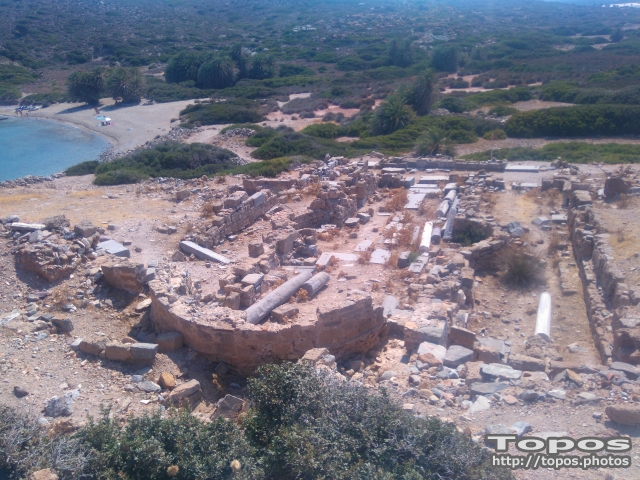


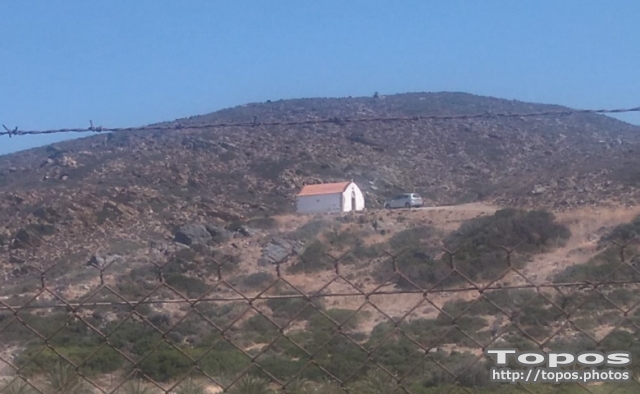

Psili ammos Beach: An exceptional beach with fine, golden sand and turquoise waters. Is is located very close to the south of famous Palm Beach Vai, east Crete, 7km north from Palekastro village and 90km far from Heraklion city.
The hills create a natural division for privacy.Its name means Fine Sand and the sand extends up to the hill.
On Psili Ammos beach, once can see the characteristic dunes, which are, Aeolian coastal sand deposits, which create low sand dunes extending over the entirety of the beach’s coastal zone.
In order to reach this remote beach, you have to walk 10 min. starting from Vai palm beach to southeast.

Akti Villas in Kouremenos : The complex is located in a quiet and picturesque area in Kouremenos, 2 km far away from Palekastro, East Crete.
It is ideal for couples and families looking for quality and ultimately relaxing holidays away from the mudding crowds. Akti Villas is built to offer a comfortable and friendly environment for ideal summer vacations.




Palm beach Vai
Vai beaches are located 25 km from Sitia and 6 km far from Palekastro Village. The combination of a magnificent beach with a rare grove of palm trees makes Palm Beach Vai one of the absolute musts of Crete.
According to a legend, Arab pirates who came to Crete threw out the pips of the dates they were eating while they were here and that from these came this grove of 5000 palms. It is prohibited to camp overnight within the grove, which covers an area of 60 acres and is protected by fencing under the care of the Forestry Service. It is organised and has been awarded with the EU Blue Flag.
It is an exotic, tropical beach with fine sand and pebbles and crystal-clear blue sea. 155 km far from Heraklion Airport.




It’s a great pleasure to welcome you to Castri Village Hotel. The management team and the staff of our hotel will be there for you in order to provide you a time to remember.
CASTRI VILLAGE
is built near the most beautiful beach of the Eastern Crete, on the hill of Kouremenos, with an exceptional view. It is 300 meters away from the beach of Kouremenos, 2 kilometers away from the village of Palekastro and close to the famous palm forest of Vai.
Akti Villas in Kouremenos : The complex is located in a quiet and picturesque area in Kouremenos, 2 km far away from Palekastro, East Crete.
It is ideal for couples and families looking for quality and ultimately relaxing holidays away from the mudding crowds. Akti Villas is built to offer a comfortable and friendly environment for ideal summer vacations.


Live a different lifestyle in the eco - traditional studios, located in Palekastro, Sitia in east Crete. Our aim is to combine ecology with tradition to offer you an unforgettable experience: a return to a traditional and tranquil way of life, away from the perpetual pace of today.


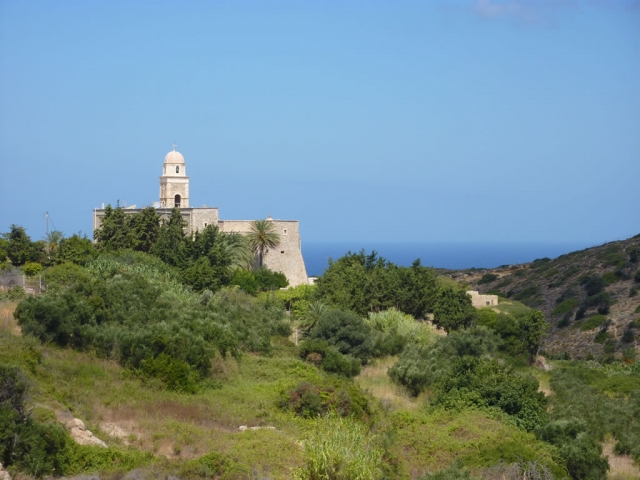
The Toplou monastery and its small museum is situated 6 km north from Palekastro and 7km before Palm Beach Vai at the east coast.There are the following collections: - Collection of Cretan icons, - Collection of engravings. The most important exhibits of the Museum are: - Theotokos the Immaculate, 15th century. Portable icon, - Christ Pantocrator, 15th century. Portable icon, painted by Andreas Ritzos(?), - St John the Precursor with scenes of his life, 17th century. Portable icon painted by F. Kavertzas,- The Dormition of the Virgin, 15th century. Portable icon, - Virgin of the Passion and St Nicolas, 1642. Portable icon, - Sts Theodoroi, 1723. Portable icon by the painter Niketas, - Holy Trinity, 17th century. Portable icon, - Sts Ignatius and Savas, 17th century. Portable icon, - Sts Athanasius, Cyril and John the Merciful, 17th century. Portable icon.
Toplou Monastery
The eastern part of Sitia in Crete is almost a deserted place, but the coastal road going off east of the town is the only one in the area with traffic because it leads to the two popular sights in east Crete - the Toplou Monastery or Moni Toplou and the palm tree forest at Vai which we will be talking on another article. On the coastal road there is not much to see, until you arrive at the historic Toplou Monastery. Be careful as the road is narrow and has many badly-designed bends.The Monastery stands alone in the middle of no-where. It has been built in mid 15th century at a time when pirates and bandits of all nationalities were ravaging Crete and has withstood many attacks and occupations by invading forces. This is partly due to its strategic position. So the monks built a thick and strong 10 m high wall around the monastery complex. The wall has small windows like arrow-holes, a heavy castle gate, and murder holes for pouring out boiling oil onto the heads of attackers. There is also a cannon on the rampart of the door. The Turkish word for a cannon is top, hence the name of the monastery is “Moni Toplou” or “Monastery with a Gun.”The main building of 800 m² has three floors, divided into cells, for guests, kitchens, the abbot’s residence and many warehouses. The bell tower has relief crowns and crosses with inscriptions dating back to 1558. The 13th Ephorate of Byzantine Antiquities carried out works of consolidation and restoration. In the Monastery, there is also an interesting Museum.Despite the strong fortification, the monastery was destroyed twice in his history, once by the Knights of Malta in 1530 and later by the Turks in 1646. Its high walls have been a refuge for rebels, both under the Turkish rule and during the German occupation in World War II. There is a cave nearby the monastery that has been used as a wireless station for the resistance against the Germans. There is a steep dirt road leading to the cave about 500 meters away from the monastery towards Sitia. Most of the monastery’s heirlooms were destroyed by the Turks in 1646, but still it is one of the best preserved and richest monasteries of Crete and there are plenty of things to see in the church and museum rooms surrounding the inner courtyard between the high walls.The monastery in general is dedicated to Panagia Theotokos and its small chapel is dedicated to the Birth of the Virgin Mary. This chapel or katholicon is a two-aisled church, the northern one dedicated to the Virgin, and the southern posterior one to St John the Theologian. It contains a wonderful icon known as “Great Art Thou, O Lord” that depicts sixty-one scenes from the Orthodox liturgy. This icon is the work of the famous icon painter Ioannis Kornaros and dates back to 1770. Another important thing to see is an epigraph of the 2nd century BC, engraved on a stone plaque, which comes from ancient Itanos and contains the first 80 lines of the Treaty of Magnisia signed by the Cretan cities of Itanos and Ierapytna under the arbitration of the Asia Minor city of Magnisia.
This stone was functioning as the altar in the chapel of the monastery’s cemetery, but now it has been enshrined in the external wall of the chapel. Many other very interesting Byzantine icons, handwritten bibles, vestments, manuscripts and many other ecclesiastical artifacts are being displayed in the monastery museum rooms. There are also well preserved wall paintings going back to the 14th century. Today there are very few monks in the monmastery, but the monastery still owns a huge part of the land which is cultivated and brings earnings for the monastery.Some final reminder for visiting monasteries in Greece is the existence of etiquettes regarding the way you are dressed. In most monasteries no shorts are allowed, either for men and women, as well as swimming suits or “hot” mini skirts. If they think that you are not dressed decently, they will not allow you to enter the monastery, so be prepared for this. However in many monasteries there are simple clothes you can wear and visit the inside. Also in many monasteries with important icons and wall paintings taking photographs is not allowed.
Toplou Monastery in Palekastro Toplou Monastery in Palekastro Toplou Monastery in Palekastro Toplou Monastery in Palekastro Toplou Monastery in Palekastro Toplou Monastery in Palekastro Toplou Monastery in Palekastro Toplou Monastery in Palekastro Toplou Monastery in Palekastro

The Petrokopio ancient quarry is located in the Kalamaki position and it is said to have provided the structural materials for nearby Ancient Itanos. The man made incisions and abandoned columns are clearly visible in the quarry.


 Login with
Facebook
Login with
Facebook